
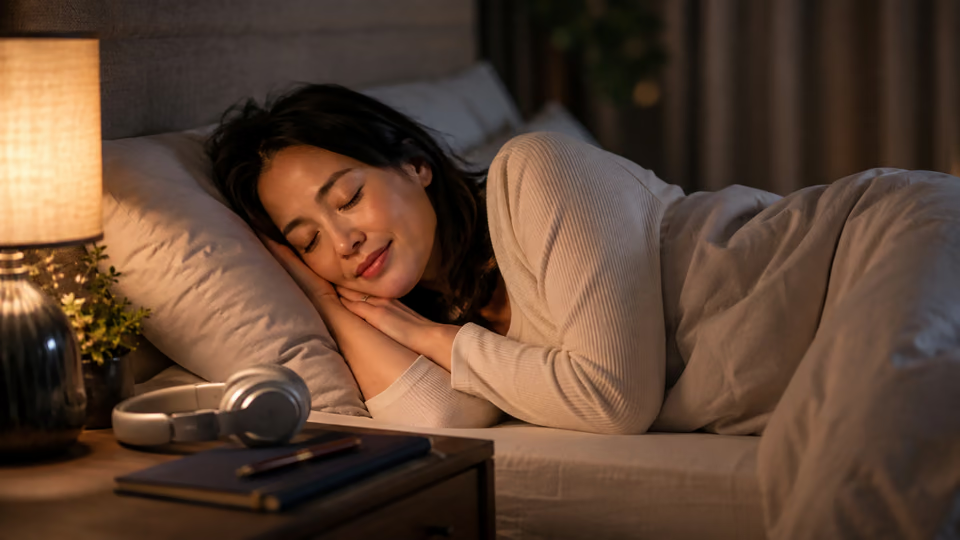
Anxiety often waits until the room gets quiet. During the day, messages, responsibilities, work, family, errands, conversations, and decisions keep your attention outward. But when night comes, the distractions fade. The body is tired. The lights are low. You finally lie down—and suddenly, your mind becomes loud.
A conversation replays. Tomorrow’s list appears. Your chest feels tight. Your thoughts move faster than your breath. You want to sleep, but your body does not feel ready to let go.
If you are wondering how to calm anxiety before sleep, the answer is not to force yourself into instant peace. Anxiety does not usually soften when it is judged, rushed, or pushed away. It often needs a gentler transition.
At SoulFul GLO, bedtime anxiety is met through ritual: calming sound journeys, guided meditation, gentle yoga, journaling, and self-discovery practices that help you release the day and return to yourself.
Try the Sleep Anxiety Journey with SoulFul GLO Unlimited.
Quick Answer: How Do You Calm Anxiety Before Sleep?
To calm anxiety before sleep, create a short bedtime ritual that signals safety and rest to the body. Start by dimming lights, placing your body in a supported position, softening the exhale, listening to calming sound, and writing down any thoughts that keep repeating. The goal is not to force sleep, but to create a softer transition into rest.
- Dim the lightsCreate one clear signal that the day is changing.
- Put your phone awayReduce stimulation and give your attention somewhere quieter to land.
- Feel supportedNotice the bed or floor holding your body.
- Breathe gentlyLet the exhale become a little softer and longer.
- Listen and releasePlay a calming sound journey, write one thought that can wait, and repeat: “For tonight, this is enough.”
Why Anxiety Feels Stronger Before Sleep
Anxiety can feel stronger at bedtime because the day finally stops asking you to respond outwardly. When everything is quiet, your inner world becomes easier to hear.
Your Mind Starts Processing the Day
Things you did not have time to feel may rise to the surface. A conversation, a worry, an unfinished task, or a small emotional moment can suddenly feel bigger at night.
Tomorrow Begins Too Early
Instead of resting, your mind may try to prepare for tomorrow. It starts planning, predicting, rehearsing, and problem-solving.
The Body Holds Tension
Anxiety is not only mental. It can show up as tight shoulders, a tense jaw, shallow breathing, a restless stomach, or a heavy chest.
The Pressure to Sleep Adds More Pressure
Thinking “I need to fall asleep now” can become another anxious thought. The harder you try to force sleep, the further away it can feel.
A gentle nighttime routine gives anxiety somewhere softer to go. It does not shame the mind for being active. It gives the mind and body a new signal: the day is complete; you can begin to release.
How to Calm Anxiety Before Sleep Tonight
- Reduce stimulationDim the lights, lower the volume of your environment, and place your phone away from your pillow if possible. You do not need a perfect bedroom—just one small signal that the day is changing.
- Let the body be supportedLie down or sit comfortably. Feel your back against the bed, your head on the pillow, your hands resting, your legs supported, and the blanket around you. Say silently: “I do not have to hold myself up right now.”
- Let the breath be naturalDo not force deep breathing if it feels uncomfortable. Notice the breath, then gently lengthen the exhale: inhale naturally, exhale softly, pause, and repeat.
- Choose one anchorYour anchor may be breath, sound, body support, a soft phrase, the blanket, or a hand on your heart. When anxious thoughts return, come back to the anchor.
- Close the mental loopIf a thought keeps repeating, write it down. Then write: “This can wait until tomorrow.” The mind may settle more easily when it knows the thought has not been ignored.
The SoulFul GLO Sleep Anxiety Ritual
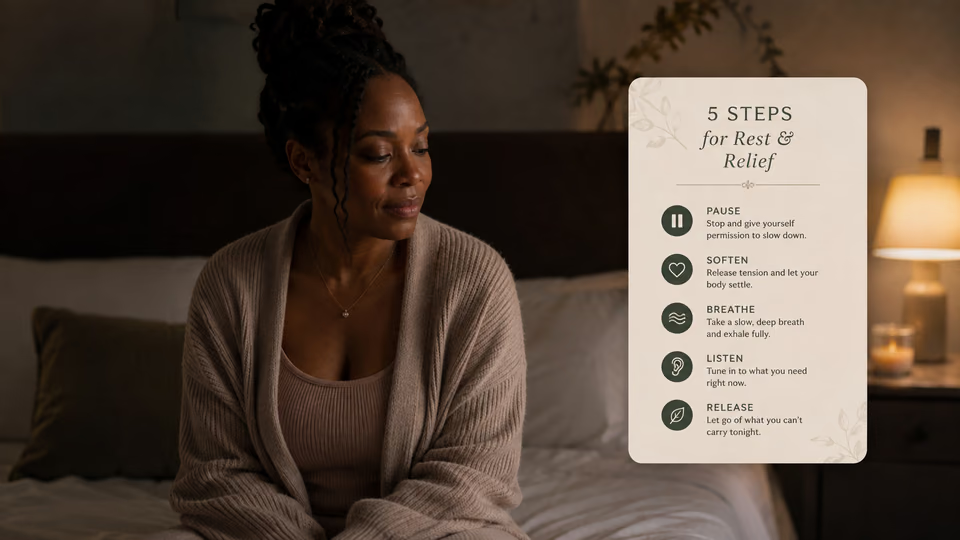
Use this five-part ritual when anxiety follows you into bed.
- 1. PauseBefore trying to sleep, pause for one minute. Ask, “What am I still carrying from today?” Do not solve it. Just notice.
- 2. Soften the bodyLet the jaw unclench, the shoulders drop, and the hands open. If you feel restless, do one gentle stretch before lying down.
- 3. Breathe gentlyLet the breath become soft, not forced. Try: “Inhale, I arrive. Exhale, I release.”
- 4. ListenPlay a calming sound journey or sleep anxiety track at a low volume. Sound gives the mind something steady to rest on.
- 5. ReleaseEnd with one sentence: “For tonight, this is enough.” The ritual does not need to erase anxiety. It only needs to help you feel a little less alone with it.
Explore calming sound journeys in the SoulFul GLO Sound Journey Library.
3-Minute, 5-Minute, and 15-Minute Bedtime Anxiety Routines
| Time | Best For | Routine |
|---|---|---|
| 3 minutes | Very tired but anxious | 1 minute body support, 1 minute soft sound, 1 minute closing phrase |
| 5 minutes | Racing thoughts | 1 minute journaling, 2 minutes breath awareness, 2 minutes sound journey |
| 15 minutes | Full wind-down | 3 minutes restorative stretch, 3 minutes journaling, 5 minutes sound journey, 4 minutes meditation |
You do not need to complete the longest version. A short ritual practiced gently is often more supportive than a perfect ritual that feels impossible.
Use a Sound Journey as Your Nighttime Anchor
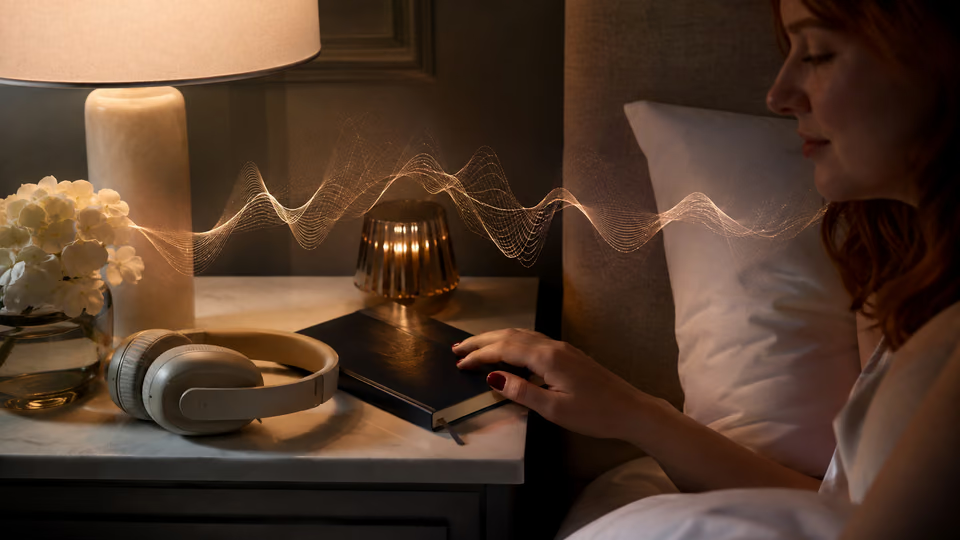
When anxiety is loud, silence can sometimes feel too empty. A sound journey gives your attention somewhere to land. Instead of lying in bed with only your thoughts, you can listen to gentle ambient textures, low grounding tones, soft strings, breath-like rhythms, nature-inspired sound, Far East-inspired instruments, or slow soundscapes designed for rest.
SoulFul GLO’s sound journeys are created to feel immersive, calming, and emotionally reflective. They are not just background audio. They are rituals of listening.
| Bedtime Anxiety State | Sound Pairing | Why It Helps |
|---|---|---|
| Racing thoughts | Minimal soundscape | Gives the mind a simple anchor |
| Emotional heaviness | Warm, soulful tones | Creates a softer atmosphere |
| Physical tension | Low grounding sound | Supports body awareness |
| Restlessness | Slow rhythmic sound | Helps attention settle |
| Sleep transition | Gentle sleep journey | Signals the day is ending |
Learn more about SoulFul GLO’s Far East-inspired sound world. To decide whether you need a soundscape, guided meditation, or yoga practice tonight, read Soundscapes vs Guided Meditation vs Yoga.
Gentle Breathing for Bedtime Anxiety
Breathing practices can be helpful, but they should feel safe and easy. If you are anxious, forcing a deep breath may feel uncomfortable. Start with awareness before control.
Soft Exhale Breathing
Inhale naturally. Exhale slightly longer than usual. Rest for one moment. Repeat for one to three minutes without straining.
Hand-on-Heart Breathing
Place one hand on your heart or chest. Say, “I am here.” Inhale softly, exhale slowly, and feel the hand rise or fall.
Listening Breath
Play a calming sound journey. Let the sound guide the rhythm of your breath without forcing it. Sound offers structure without pressure.
Journaling Prompts to Release the Day
Anxiety before sleep often includes unfinished mental loops. Journaling helps place those loops somewhere outside the mind. Try one prompt:
- What thought keeps repeating tonight?
- What am I trying to solve before sleep?
- What can wait until tomorrow?
- What did I do my best with today?
- What does my body need right now?
- What is one thing I can release for tonight?
- What would I tell a friend who felt this way?
- What is one small truth I can trust right now?
- What support do I need tomorrow?
- What can I stop carrying alone?
Try a simple three-line practice: Tonight I am carrying: … For now, I can release: … Tomorrow, one gentle step is: … This is enough. You do not need to process your entire life before bed.
Gentle Yoga to Calm Anxiety Before Sleep
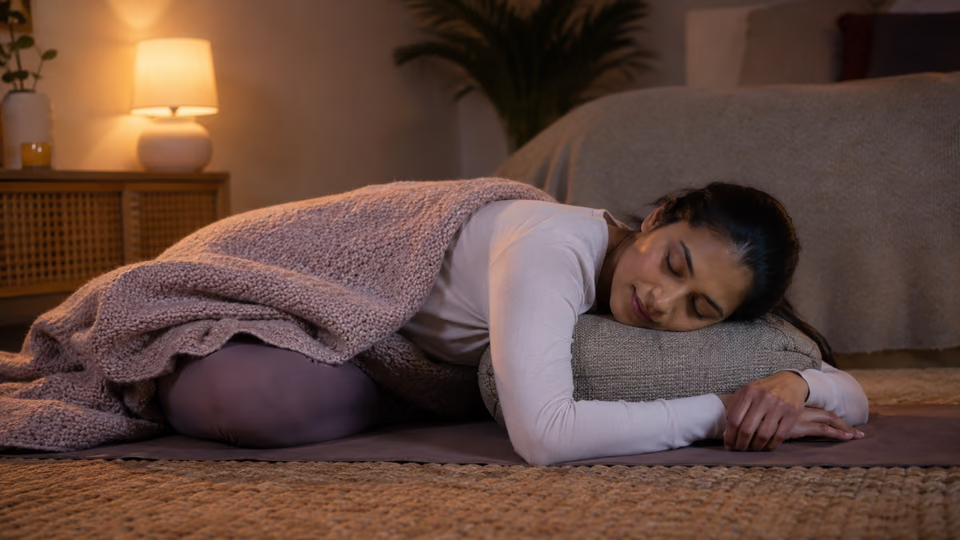
If anxiety lives in your body, movement may help more than trying to think your way into calm. Choose slow, quiet shapes.
- Child’s Pose: Rest your forehead on a pillow or mat. Let the body feel held.
- Supine Twist: Lie on your back and let your knees fall to one side. Keep the breath soft.
- Legs Up the Wall: Rest your legs against a wall or on a chair. Let the floor support you.
- Supported Rest: Place a pillow under your knees and rest one hand on your belly.
For more sleep-focused movement, read Restorative Yoga for Sleep. For anxiety-specific movement, visit Yoga for Anxiety: A Gentle Flow. For emotional balance through movement, explore Yoga for Emotional Balance.
Bedtime Anxiety for Women
For many women, bedtime anxiety is tied to everything held during the day: the emotional labor, remembering, caregiving, planning, and pressure to be responsive, capable, kind, productive, available, and composed. At night, the nervous system may finally ask, “What about me?”
A women-centered sleep anxiety ritual should not feel like another task. It should feel like permission: permission to stop, soften, release what cannot be solved tonight, and be held by sound, breath, and stillness.
For more women-centered meditation support, read Meditation for Women.
What Not to Do When Anxiety Keeps You Awake
- Do not force sleep. Focus on restfulness instead.
- Do not fight every thought. Name thoughts gently and return to sound, breath, or body support.
- Do not doomscroll. Scrolling may distract you temporarily, but it can keep the mind stimulated.
- Do not overprocess before bed. Choose softer journaling prompts rather than deep emotional analysis.
- Do not choose intense audio. Choose steady, calming sound.
- Do not blame yourself. Bedtime anxiety is not a character flaw. Meet it with care.
Try the Sleep Anxiety Journey With SoulFul GLO
SoulFul GLO helps you create a softer nighttime ritual when anxiety makes sleep feel far away. Listen to calming sound journeys, try sleep anxiety meditation, pair breath with sound, journal before bed, explore restorative yoga, or choose a practice based on your mood.
You do not need to fix everything tonight. You can begin with one sound, one breath, one gentle sentence, and one small return to yourself.
Create a Ritual That Helps the Day Feel Complete
Try the Sleep Anxiety Journey with SoulFul GLO Unlimited or explore calming sound journeys in the library.
Related SoulFul GLO Guides
- Explore SoulFul GLO
- Restorative Yoga for Sleep
- Yoga for Anxiety: A Gentle Flow
- Yoga for Emotional Balance
- Soundscapes vs Guided Meditation vs Yoga
- Far East Healing Sounds
- Meditation for Women
- What Should I Practice Today?
Frequently Asked Questions
How do I calm anxiety before sleep?
Dim the lights, put your phone away, feel your body supported, breathe softly, listen to a calming sound journey, and write down thoughts that keep repeating.
Why does anxiety get worse before bed?
The day becomes quiet and the mind has more space to process worries, unfinished tasks, and emotions. The pressure to fall asleep can also add more anxiety.
What should I listen to when I feel anxious before sleep?
Choose soft, steady, low-volume sound. A calming sound journey, sleep soundscape, gentle ambient track, or guided meditation can give your mind a restful anchor.
Can meditation help bedtime anxiety?
Meditation may give your attention a calmer place to rest. It does not force anxiety to disappear, but it can help you notice thoughts without following every one.
Is journaling good for anxiety before sleep?
Journaling can help when anxious thoughts repeat. Writing one thought down and noting what can wait until tomorrow may help create emotional closure before bed.
What yoga poses help anxiety before sleep?
Gentle poses such as Child’s Pose, Supine Twist, Legs Up the Wall, and supported rest can help the body release tension.
How long should a bedtime anxiety routine be?
Start with three to five minutes. A short, calming ritual is often easier to repeat than a long routine. Expand to 15 minutes when you have more time.
When should I seek professional help for sleep anxiety?
If anxiety before sleep is frequent, intense, or affecting your daily life, relationships, work, or wellbeing, consider speaking with a qualified medical or mental health professional. SoulFul GLO practices can support self-care, but they are not a substitute for professional care.
Final Takeaway
Calming anxiety before sleep is not about forcing the mind into silence. It is about creating a gentle bridge between the day and rest: a softer room, a slower breath, a calming sound, a few thoughts placed on the page, a body supported by stillness, and a quiet reminder that for tonight, this is enough.
For Tonight, This Is Enough
Create a softer bedtime ritual through sound journeys, meditation, journaling, yoga, and emotional wellness practices.
Wellness note: This article supports general wellbeing and self-care. It is not medical advice or a substitute for qualified mental health or medical care.