
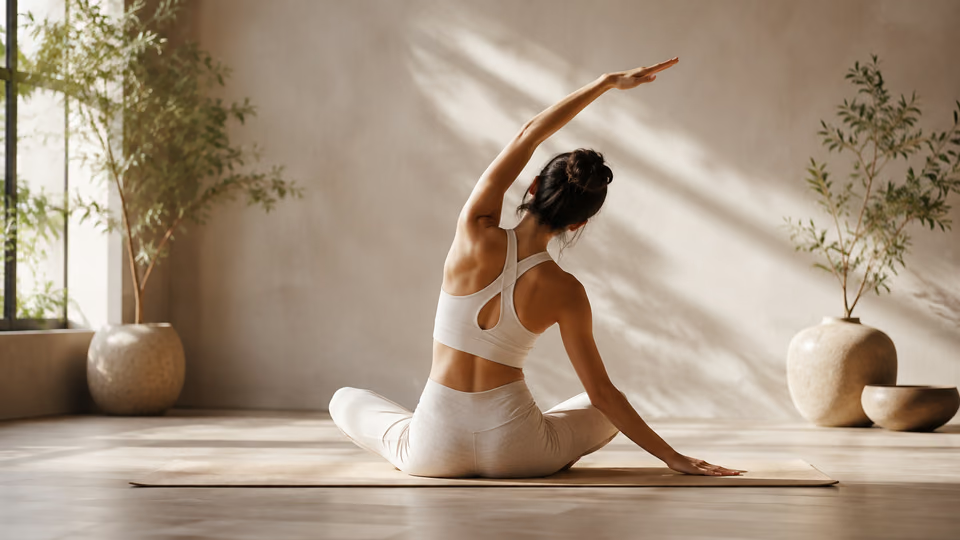
Yoga is often marketed as a workout. But at its core, yoga can be something quieter and more powerful: a way to regulate your nervous system through breath, sensation, and steady attention.
When emotions feel intense - stress, irritability, restlessness, low mood - your nervous system may be stuck in "high alert" or "shut down." Mindful movement helps you come back to the middle: grounded, steady, and present. You do not need advanced poses. You need a repeatable rhythm: gentle movement, supportive rest, and a few minutes of sound that makes it easier to soften.
In this guide you will learn how yoga supports emotional balance without turning it into fitness pressure, a beginner-friendly weekly plan, and how to pair yoga with Sound Journeys for deeper calm.
Quick Links
Yoga as Nervous-System Support (Not Just a Workout)
Emotional balance is not only a mindset - it is often a body state.
When your nervous system is activated, you may notice:
- Shallow breathing.
- Tight jaw or shoulders.
- Racing thoughts.
- Irritability or emotional reactivity.
- Difficulty sleeping.
Mindful yoga helps because it combines three regulation tools in one practice.
1. Breath: your built-in reset switch
Slow, steady breathing - especially longer exhales - can signal safety to the body. That does not mean emotions disappear; it means you have more space to meet them.
2. Sensation: anchoring in the present
When attention returns to sensation - feet on the mat, stretch in the hips, warmth in the chest - the mind has less room to spiral.
3. Rhythm: predictability builds calm
A simple repeated sequence, done gently, creates a predictable rhythm. Predictability is soothing.
This is why beginner-friendly yoga can be so effective for emotional balance: it is not about performance. It is about returning to your body in a safe, steady way.
The Mindful Movement Approach
Before the plan, set a few guiding principles.
Practice principle 1: low and slow
If you are using yoga for emotional balance, intensity is optional. Move at a pace where you can breathe easily and feel steady.
Practice principle 2: stable breath first
If your breath becomes strained, shorten the pose or reduce effort. Your breath is the guide.
Practice principle 3: consistency beats complexity
A 15- to 25-minute session repeated often will support your nervous system more than a rare, intense class.
How to Pair Yoga With Sound Journeys
Sound can make it easier to settle, especially when your mind is busy.
Option A: Sound before yoga, 3-5 minutes
Use a short Sound Journey to transition from "day mode" to "practice mode." This works well if you feel anxious, scattered, or overstimulated.
Option B: Sound during yoga, low volume
Play a steady Sound Journey quietly in the background during gentle flow. This helps maintain rhythm and prevents the mind from jumping around.
Option C: Sound after yoga, 10-15 minutes
After movement, let your body rest and listen. This is especially powerful after restorative sessions or before bed.
If you want to explore this style of practice, start with the Yoga Library and pair it with Sound Journeys in your routine. To unlock full access to premium sessions, visit SoulFul GLO Unlimited.
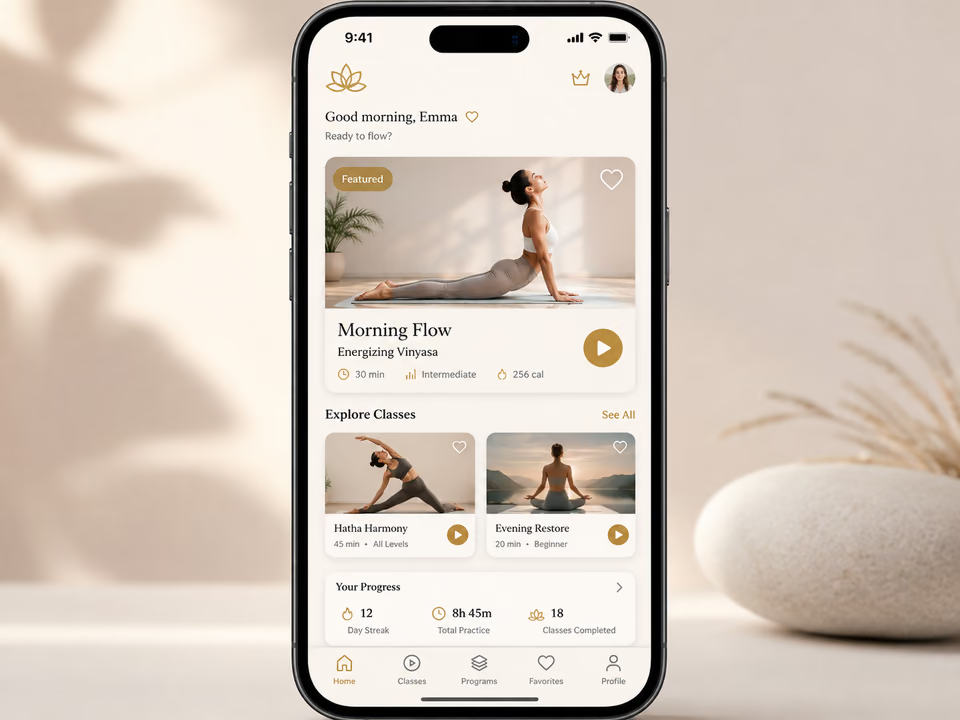
Your Beginner-Friendly Weekly Plan
This plan is designed for emotional balance: steady movement, supportive rest, and simple repetition. You can do it in 20-30 minutes per day.
Weekly overview
- Monday: Gentle Flow + Breath, 20-25 minutes.
- Tuesday: Restorative + Sound, 20-30 minutes.
- Wednesday: Gentle Flow, 20-25 minutes.
- Thursday: Restorative + Nervous System Downshift, 20-30 minutes.
- Friday: Gentle Flow + Gratitude Close, 20-25 minutes.
- Saturday: Longer Slow Flow or Mixed Session, 25-35 minutes.
- Sunday: Rest Day or 10-minute floor sequence, 10-15 minutes.
Daily Practice Guide
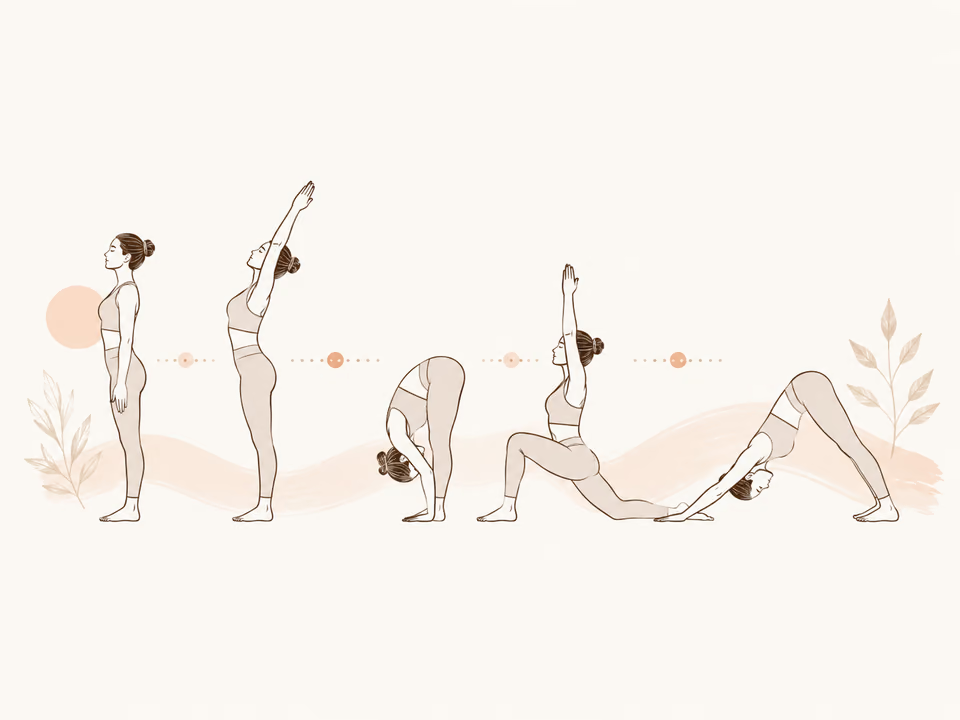
- Monday - Gentle Flow for steady energyGoal: soften stress and build a calm baseline. Warm up with Cat-Cow for 1-2 minutes, then move slowly through Downward Dog, Forward Fold, Half Lift, and Mountain. Add Warrior I or II with short holds and easy breath. Close with Child's Pose for 2 minutes. Sound pairing: play a calm Sound Journey at low volume during the last 10 minutes.
- Tuesday - Restorative to release emotional tensionGoal: downshift the nervous system. Try Supported Child's Pose, Reclined Twist on both sides, Legs-Up-the-Wall for 3-6 minutes, and Savasana for 3-5 minutes. Sound pairing: listen after practice for 10-15 minutes while resting.
- Wednesday - Gentle Flow to clear mental noiseGoal: focus through rhythm. Begin with seated side stretch and neck release, then move through Low Lunge, Half Split, and Lunge on each side. Add Tree Pose only if it feels supportive. Close with easy seated breathing for 2 minutes.
- Thursday - Restorative for sleep supportGoal: prepare for deeper rest. Practice Supine Butterfly, Supported Bridge with a block or pillow, a supported Forward Fold, and Savasana. Sound pairing: start a sleep-friendly Sound Journey and set a timer if you listen in bed.
- Friday - Gentle Flow with an emotional release closeGoal: move, then integrate. Warm up with Cat-Cow and Thread-the-Needle, move through a slow Sun A for 3 rounds, add Pigeon Pose or figure-4, then close with one hand on your heart and one gratitude sentence.
- Saturday - Longer slow flow or mixGoal: build confidence and consistency. Choose either a longer gentle flow for 25-35 minutes or gentle flow for 20 minutes plus 10 minutes of sound rest. Keep it simple. Choose what your body will actually do.
- Sunday - Rest day or floor resetGoal: recover and reset. If you want movement, try 2 minutes of breathing, 5 minutes of gentle stretching, and 3 minutes of resting. Emotional balance grows when rest is part of the plan.
A Pairing Menu Based on Your Mood
- If you feel anxious: Restorative yoga + sound after practice.
- If you feel low energy: Gentle flow + sound during practice.
- If you feel overstimulated: Sound before + short gentle flow.
- If you feel sad or heavy: Slow hip openers + long rest + gentle sound.
Common Beginner Mistakes
Mistake 1: Pushing intensity to fix emotions
Emotions do not need punishment. They need space. Try instead: reduce effort and increase breath smoothness.
Mistake 2: Holding poses while holding your breath
That trains the body into stress. Try instead: shorten the hold and let the exhale lead.
Mistake 3: Skipping rest days
Rest is regulation. Try instead: schedule restorative sessions the way you schedule workouts.
Start Your Mindful Movement Ritual With SoulFul GLO
If you want yoga that supports emotional balance - plus premium Sound Journeys to deepen calm - start here:
Start SoulFul GLO Unlimited
Build a weekly mindful movement ritual with yoga, restorative rest, and calming sound.