
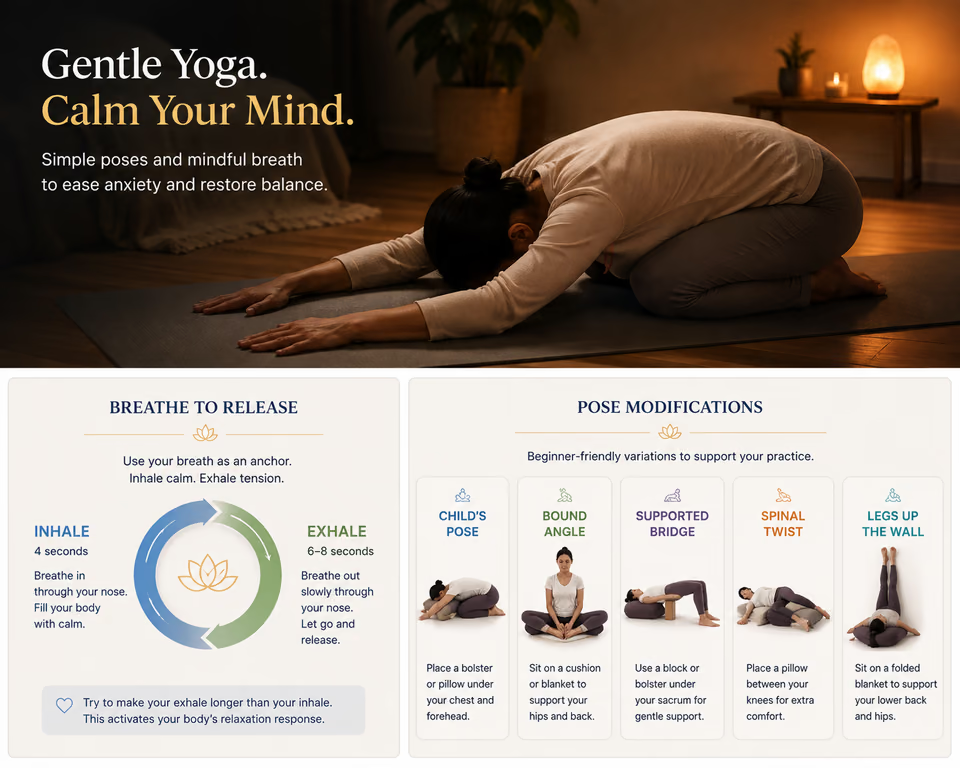
If you are searching for yoga for anxiety, you are likely not looking for a perfect practice - you are looking for relief that feels realistic. Anxiety can show up as racing thoughts, a tight chest, restless energy, or the sense that you cannot fully settle, even when your day is technically over. Many people find that a gentle yoga for anxiety routine can help create a softer internal environment by bringing attention back into the body through breath, sensation, and simple movement.
This article is a calming, beginner-friendly guide to anxiety relief yoga: a 5-pose flow you can do at home, with breath cues and modifications for different bodies and energy levels. You will also get a simple 10-minute timer plan and a soundscape pairing strategy to make the practice feel more supportive, especially when your mind is loud.
If you are new to SoulFul GLO, start here: SoulFulGLO.com.
Quick Answer: What Yoga Is Best for Anxiety?
A calming yoga flow for anxiety is typically best when it includes:
- Slow, grounded poses like Child's Pose and forward folds.
- Longer exhales, a simple form of breathwork for anxiety.
- Gentle transitions rather than fast sequences.
- Modifications that reduce strain and pressure.
- A closing rest posture, even 60 seconds helps.
If you only have 10 minutes, do a short sequence of five poses with steady breathing and finish with a brief rest. Pairing the flow with a calming soundscape may support relaxation and reduce mental noise.
A Gentle Note on Language and Safety
This article is educational and supportive. Yoga does not cure anxiety, and it is not a replacement for professional mental health care. Many people find yoga may support calm, body awareness, and self-regulation, especially when practiced gently and consistently.
If any posture or breathing pattern increases discomfort, dizziness, or distress, pause and choose a simpler option or return to natural breathing.
Quick Links
- Explore Yoga Sessions →
- Explore Guided Meditations →
- Read Yoga for Emotional Balance →
- Unlock SoulFul GLO Unlimited →
Why Yoga Can Help When Anxiety Is in the Driver's Seat
Anxiety often pulls attention into the future, into what-if thinking, or into a loop of reviewing and second-guessing. A grounding yoga practice offers a different pathway: present-moment sensation.
Many people find yoga helps because it:
- Creates a physical anchor through feet, hands, hips, and breath.
- Encourages slower breathing, especially longer exhales.
- Releases muscle guarding in the jaw, shoulders, and hips.
- Builds a sense of agency: "I can do one small supportive thing right now."
If you want a broader nervous-system view of yoga beyond anxiety, read Yoga for Emotional Balance.
Guided Meditation vs Yoga vs Soundscapes
On anxious days, decision fatigue can be part of the struggle. Here is an easy rule of thumb:
- Choose yoga when anxiety feels restless or physical, such as tension, agitation, or pacing.
- Choose guided meditation when anxiety feels mental, such as thought loops or worry spirals.
- Choose soundscapes when you are overstimulated and need something passive to hold you.
For the full comparison and how to stack them, read Soundscapes vs Guided Meditation vs Yoga.
The SoulFul GLO Approach
The most effective calming practice is the one you will do again tomorrow. That is why this flow is simple, low-pressure, modifiable, and designed to work in 10 minutes.
You are not trying to fix yourself. You are creating a safer internal environment, one breath at a time.
Your 10-Minute Timer Plan
Use this as your structure. Set a timer or use an in-app session and follow the flow.
Option A: Exactly 10 Minutes
- Pose 12 minutes.
- Pose 22 minutes.
- Pose 32 minutes.
- Pose 42 minutes.
- Pose 52 minutes.
Option B: 12-15 Minutes
Keep Pose 1 and Pose 5 longer. These are often the most soothing: Pose 1 for 3 minutes and Pose 5 for 3-5 minutes.
Option C: I Cannot Do Much Today
Take 3 minutes: do Child's Pose plus Legs Up the Wall, and breathe slowly.
The 5-Pose Gentle Yoga Flow for Anxiety
Before you begin, dim the lights if possible, keep a pillow and folded blanket nearby, and choose a pace that feels steady rather than rushed.
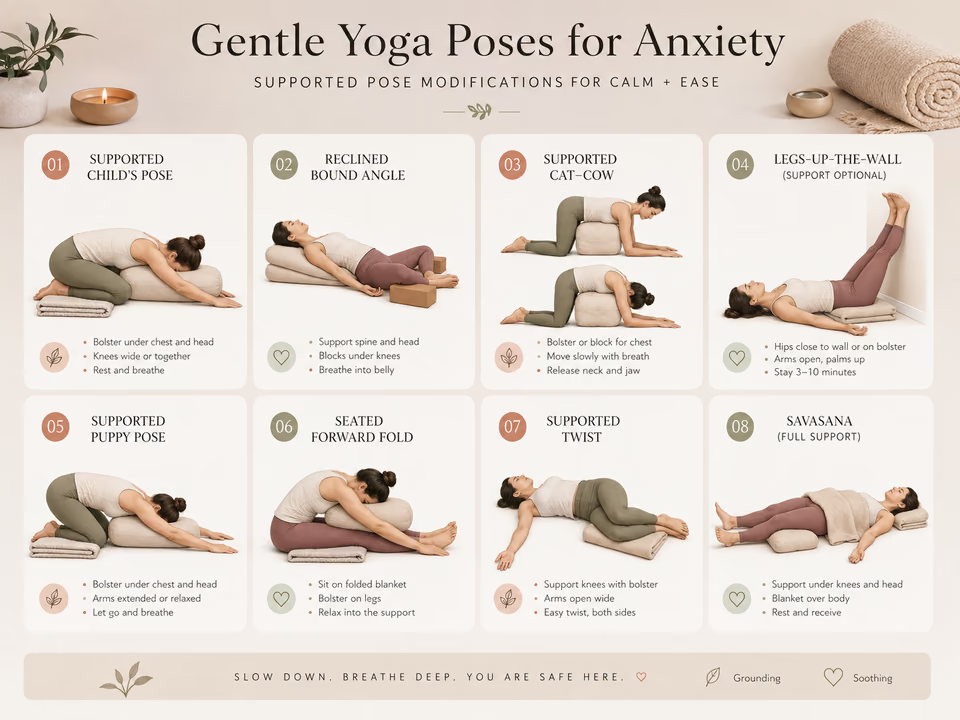
Breath Cue You Will Use Throughout
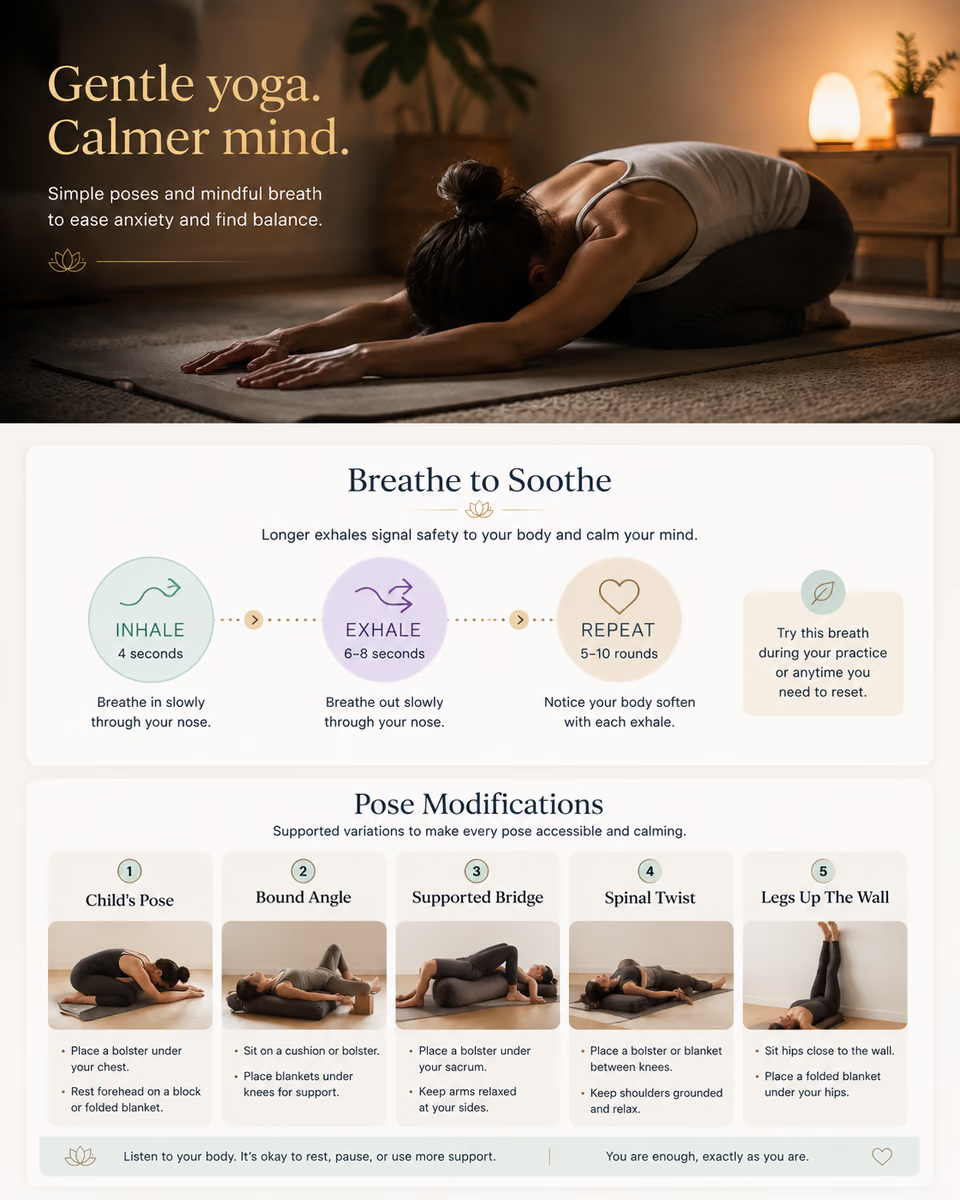
Try this simple ratio: inhale through the nose for a count of 4, then exhale for a count of 6. If counting creates stress, skip the numbers. Just make your exhale slightly longer.
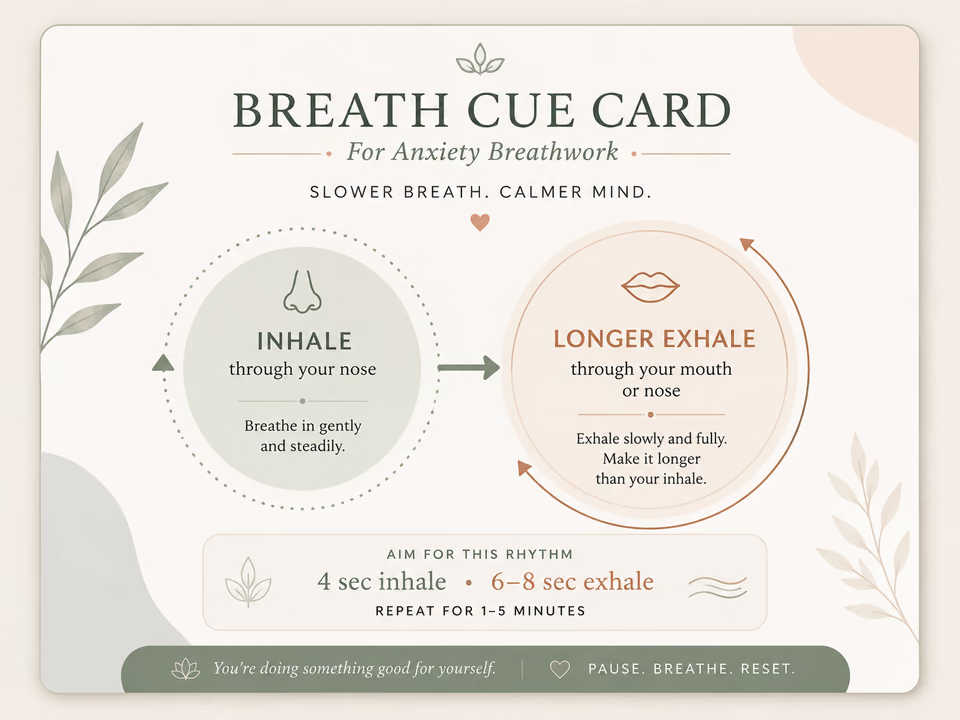
Pose 1: Supported Child's Pose
Why it may help: Many people find Child's Pose reduces mental noise by giving the body a contained, protected shape.
How to do it: Kneel on the mat, bring big toes together, and keep knees slightly apart. Fold forward and rest your forehead down. Add a pillow under the chest or belly if you want more support.
Breath cue: Inhale and feel the back ribs expand. Exhale and soften the shoulders and jaw.
Modifications: Place a folded blanket behind knees or under shins if knees are sensitive. Widen knees more or place a pillow under hips if the hips feel tight. Stack fists or a block under the forehead if it does not reach the floor.
Time: 2 minutes, or longer if you need it.
Pose 2: Cat-Cow
Why it may help: Gentle spinal motion gives restless energy a place to go, while linking movement to breath supports regulation.
How to do it: Come to hands and knees, wrists under shoulders and knees under hips. Inhale and arch the spine slightly into Cow. Exhale and round the spine gently into Cat.
Breath cue: Inhale, "I make space." Exhale, "I let go."
Modifications: If wrists hurt, come onto fists or place forearms down. If knees hurt, pad them with a folded blanket. Keep the movement small; this is not a deep stretch.
Time: 2 minutes at a slow, steady pace.
Pose 3: Supported Low Lunge or Half-Kneeling Hip Opener
Why it may help: Anxiety often tightens the hip flexors. A supported lunge can release holding without intensity.
How to do it: Step the right foot forward between the hands. Lower the left knee down and pad it. Keep hands on blocks, a pillow, or the front thigh.
Breath cue: Inhale and lengthen through the spine. Exhale and soften the hips and belly.
Modifications: If balance feels shaky, keep hands on blocks or practice next to a wall. If knees are sensitive, add extra padding or skip this pose and do a seated hip stretch. If it feels too intense, keep the torso upright and reduce depth.
Time: 1 minute per side, 2 minutes total.
Pose 4: Supported Seated Forward Fold or Seated Rest
Why it may help: Gentle forward folds can feel calming because they turn attention inward and reduce sensory input.
How to do it: Sit with legs extended or knees bent. Place a pillow on the thighs. Hinge forward and rest the belly or chest on the pillow.
Breath cue: Inhale into the back body. Exhale and let the head and shoulders be heavy.
Modifications: Bend the knees a lot if the hamstrings pull. Sit on a folded blanket and keep the fold higher if the low back feels strained. If forward folding increases anxiety, skip it and sit upright with hands on heart and belly.
Time: 2 minutes.
Pose 5: Legs Up the Wall or Calves on Chair
Why it may help: This is a classic grounding posture that many people find soothing at the end of the day.
How to do it: Sit sideways next to a wall. Swing the legs up as you lower your back to the floor. Let arms rest by your sides.
Breath cue: Let the breath be natural. If you want structure, inhale for 4 and exhale for 6 for a few cycles.
Modifications: Scoot hips away from the wall if hamstrings are tight. If a wall is not available, place calves on a chair or sofa seat. If dizziness occurs, come out slowly and rest on your side.
Time: 2 minutes, or 3-5 minutes if possible.
Soundscape Pairing Plan
Sound can help reduce the empty space where worry thrives. Here is a simple pairing plan you can repeat.
Option 1: Sound During the Flow
This is best for restless minds. Choose a steady, minimal soundscape at low volume and let it play for the full 10 minutes.
Option 2: Sound After the Flow
This is best for winding down. Do the 10-minute flow in quiet, then play a calming Sound Journey for 10-20 minutes while resting.
Option 3: Guided Meditation + Sound
This is best for racing thoughts. Do a short guided meditation first for 3-5 minutes, then do the yoga flow, then finish with a soundscape.
Browse options: Yoga, Guided Meditation, and Sound Journeys.
A Simple Choose-Your-Practice Table
| If you feel... | Best starting choice | Why it helps | Time |
|---|---|---|---|
| Restless and tense | Yoga first | Moves energy and releases holding. | 10-15 min |
| Thought loops | Guided meditation first | Gives attention a clear path. | 5-10 min |
| Overstimulated | Soundscape first | Low effort and reduces sensory load. | 10-20 min |
| Low energy and anxious | Gentle yoga + sound | Soft activation plus a calming anchor. | 10-25 min |
Common Mistakes to Avoid
Mistake 1: Treating It Like a Workout
Try instead: smaller shapes, slower pace, and more support.
Mistake 2: Forcing Deep Breathing
Try instead: soft breath. Let it be natural and simply lengthen the exhale slightly.
Mistake 3: Holding Poses That Feel Unsafe
Try instead: choose the modification. Safety builds calm.
Mistake 4: Practicing Under Bright Light and Distractions
Try instead: dim lights, Do Not Disturb on, and 10 minutes protected.
Mistake 5: Expecting Immediate Results
Try instead: measure success as "Did I return to my body at least once?" Consistency builds change.
Who This Is Best For
This flow is best for:
- People who feel physically tired but mentally restless.
- Beginners who want beginner yoga for anxiety without intensity.
- Anyone who wants a grounding yoga practice they can repeat daily.
Go gently or consult a professional if you have acute injury, severe pain, medical restrictions, dizziness with breath holds or inversions, or if any posture increases panic or distress. In those cases, choose a simpler practice: supported Child's Pose, natural breathing, and a soundscape.
The SoulFul GLO Ritual: Calm Body, Clear Mind
This is a SoulFul GLO-style bedtime ritual that keeps things premium, simple, and sustainable.
- Step 1: Arrive, 2 minutesDim the lights, turn on Do Not Disturb, and set one sentence intention: "Tonight, I soften."
- Step 2: Calming yoga flow, 10 minutesUse the five-pose sequence above.
- Step 3: Sound + rest, 10-20 minutesChoose a steady soundscape or guided meditation.
- Step 4: Optional reflection, 60 secondsAsk, "What did I notice?" One word is enough: calmer, steadier, softer.
Start your ritual with the Yoga Library or Guided Meditation Library. Upgrade when you are ready with SoulFul Unlimited.
Frequently Asked Questions
Does yoga cure anxiety?
Yoga does not cure anxiety. Many people find yoga may support relaxation, body awareness, and nervous-system regulation, which can help create more ease, especially when practiced gently and consistently.
What is the best yoga pose for anxiety?
Many people find Child's Pose and Legs Up the Wall feel especially grounding. The best pose is the one that feels safe and comfortable in your body.
How long should I do yoga for anxiety?
Even 10 minutes can help create a shift. Consistency matters more than duration, so try a short flow daily for a week.
Should I do yoga or meditation for anxiety?
If anxiety feels physical, such as restless or tense, start with yoga. If it feels mental, such as thought loops, start with guided meditation. Many people find a combination works best.
Can I do this flow before bed?
Yes. This is designed as bedtime yoga. Keep it gentle, use modifications, and finish with a restful pose or a calming soundscape.
Final Takeaway
If anxiety has been pulling you out of your body and into your head, a gentle practice can be a way back without force. This yoga for anxiety flow is intentionally simple: five poses, steady breathing, and soft modifications so your nervous system can feel supported rather than challenged.
Try a Calming Yoga Flow
Start with gentle movement, add guidance if your mind is busy, and unlock the full SoulFul GLO ritual library when you are ready.
Related Reading
Wellness note: SoulFul GLO content supports general well-being and is not medical advice or treatment. Move gently, use support, and stop if a posture or breathing pattern increases distress.