
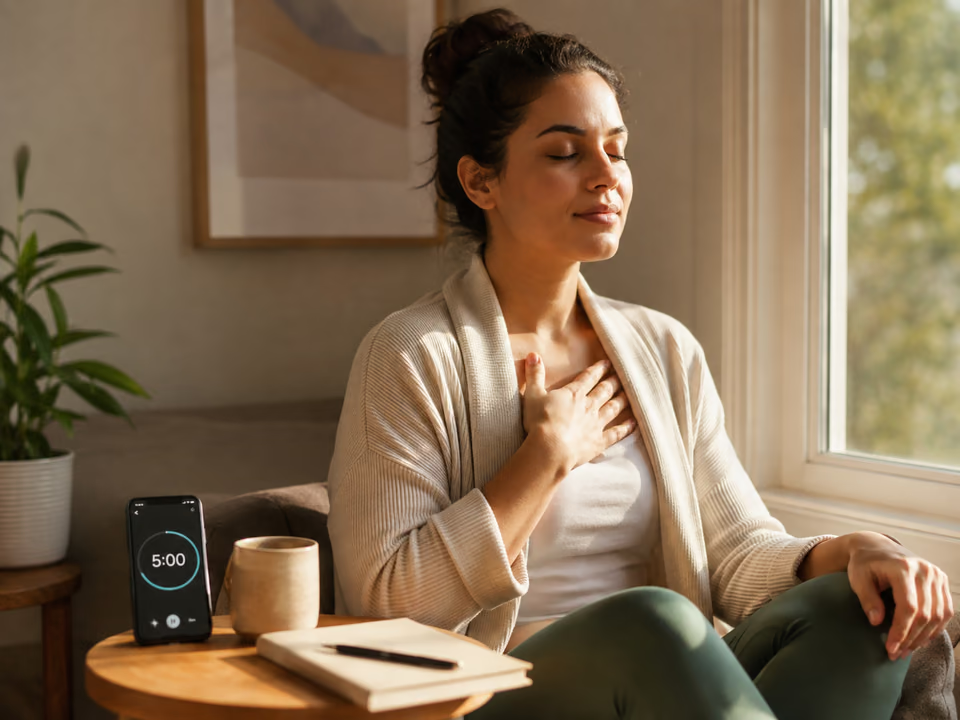
Five minutes can feel small.
Too small to matter. Too short to change anything. Too simple to help when your chest feels tight, your thoughts are moving quickly, and your body does not quite know where to land.
But sometimes five minutes is exactly the right place to begin.
A 5 minute meditation for anxiety is not about solving your whole life in one sitting. It is not about forcing your mind to become blank. It is not about becoming perfectly calm before the timer ends.
It is a short, gentle pause that gives your attention somewhere softer to rest.
When anxiety feels loud, even a few minutes of breath, body awareness, guided audio, or calming sound can help create a small space between you and the anxious thought. Not as a cure. Not as a guarantee. But as a self-care ritual you can actually return to.
At SoulFul GLO, short meditation is part of a deeper emotional wellness experience: guided meditation, sound journeys, gentle yoga, journaling, and self-discovery practices that help you come back to yourself one breath at a time.
Quick Answer: How Do You Do a 5 Minute Meditation for Anxiety?
To do a 5 minute meditation for anxiety, sit or lie down comfortably, let your breath be natural, choose one anchor such as breath, sound, body support, or a guided voice, and gently return to that anchor whenever your mind wanders.
- Minute 1: Feel the body supportedNotice where your body meets the chair, bed, or floor.
- Minute 2: Notice the breathObserve it without forcing it to change.
- Minute 3: Name anxious thoughts gentlyTry: “Worry is here” or “Planning is here.”
- Minute 4: Return to one anchorChoose sound, breath, body, or a guided voice.
- Minute 5: Close with one calming phraseRemind yourself: “I can take one moment at a time.”
The goal is not perfect calm. The goal is a gentle return.
What Is a 5 Minute Meditation for Anxiety?
A 5 minute meditation for anxiety is a short guided or self-led practice designed to help you pause, notice what is happening, and reconnect with a calmer anchor.
It may include breath awareness, body scanning, grounding, gentle guided audio, soundscapes, a calming phrase, hand-on-heart breathing, short visualization, or simple mindfulness.
A short anxiety meditation is especially useful when a longer session feels unrealistic. You might use it before a meeting, after a stressful message, during a lunch break, before sleep, after a hard conversation, when thoughts feel scattered, when your body feels tense, or when you need a reset but do not have much time.
SoulFul GLO takes that accessible idea and wraps it in a softer ritual world: guided meditation, calming sound, emotional reflection, and gentle self-connection. Explore calming practices in the SoulFul GLO Guided Meditation Library.
Why Five Minutes Can Be Enough to Begin
Anxiety can make everything feel urgent. The mind wants a full solution. The body wants relief. The nervous system wants certainty. And when someone says, “Just meditate for 30 minutes,” it can feel impossible.
Five minutes feels different. Five minutes is small enough to start.
You do not need to rearrange your day. You do not need a perfect meditation corner. You do not need silence. You do not need to feel ready. You only need a few minutes of willingness.
Short practices lower the barrier. They help you build a relationship with meditation without turning it into another thing to perform. With anxiety, this matters: a short practice can feel less intimidating than a long one, and less pressure often makes it easier to return.
A 5 Minute Meditation for Anxiety You Can Try Now
Use this practice when you feel anxious, tense, overwhelmed, or mentally scattered. You can sit, lie down, or stand with your feet on the floor.
Minute 1: Let the Body Be Supported
Begin by noticing where your body is making contact with something steady: your feet on the floor, your back against the chair, your body on the bed, or your hands resting in your lap.
Do not try to relax all at once. Just notice support. Say silently: “I am here.” Then: “Something is holding me.” Let your shoulders drop a little if they want to. Let the jaw soften if it can.
Minute 2: Notice the Breath Without Fixing It
Bring attention to your breathing. Do not force it deeper. Notice whether the breath is fast or slow, high in the chest or lower in the belly, smooth or uneven, easy or tight. Whatever you notice is okay.
Now gently soften the exhale. Inhale naturally. Exhale slowly. Pause. Repeat. If the breath feels uncomfortable, shift your anchor to the body or sound.
Minute 3: Name What Is Happening
Anxiety often feels bigger when it stays unnamed. Gently name what is present: “Worry is here,” “Tightness is here,” “Restlessness is here,” “Planning is here,” or “Fear is here.”
You are not judging it. You are noticing it. Naming creates a little space. You are not the anxious thought. You are the person noticing the anxious thought.
Minute 4: Return to One Anchor
Choose one anchor for this minute: your breath, a calming sound, your feet, your hands, a guided voice, a phrase, or the feeling of the chair or bed.
When thoughts pull you away, return gently. No frustration. No “I’m bad at this.” No need to start over. Just return. That is the meditation.
Minute 5: Close With One Gentle Phrase
For the final minute, repeat one phrase slowly:
- “I can take one moment at a time.”
- “I do not have to solve everything right now.”
- “This breath is enough.”
- “I am allowed to soften.”
- “I can return.”
Let the phrase become quieter with each breath. When the timer ends, do not rush up immediately. Take one more breath. Notice whether anything feels even slightly different. Not perfect. Not fixed. Just maybe a little softer.
When to Use a 5 Minute Anxiety Meditation
A short meditation can fit into real life.
| Moment | How to use five minutes | Gentle cue |
|---|---|---|
| In the morning | Practice before checking messages | “How am I arriving into this day?” |
| During work stress | Pause between meetings or after a tense email | Feel the chair and return to the breath |
| After a hard conversation | Come back to yourself before replaying every detail | “That conversation happened. I am here now.” |
| Before sleep | Use a softer practice when your body is tired but your mind is busy | “For tonight, this can wait.” |
| During emotional overwhelm | Return to one breath without trying to process everything | “One moment at a time.” |

What If Your Mind Keeps Wandering?
It will. That does not mean you are doing it wrong.
A wandering mind is part of meditation. The practice is not to keep your attention perfectly still. The practice is to notice that the mind wandered and return gently.
Every time you return, you are practicing. If your mind wanders 30 times in five minutes, that is 30 moments of awareness.
Try not to turn meditation into a test. You are not trying to win against your mind. You are building a softer relationship with it. When a thought appears, say: “Thinking.” Then return to breath, sound, or body. Simple. Again and again.
Pair Your 5 Minute Meditation With Sound
Sound can make a short meditation feel easier, especially if silence makes your thoughts louder. You might use soft ambient sound, gentle flute, birds in the distance, rain, low grounding tones, a guided meditation voice, or soulful sound journeys.
Sound gives attention somewhere to land. At SoulFul GLO, calming sounds and Far East-inspired textures are part of a wider sound journey experience. Peña-inspired sound elements bring an earthy, human feeling to the practice—less like generic background music and more like a ritual of listening.
Learn more in Far East Healing Sounds, Bedtime Routine With Soundscapes, and Soundscapes vs Guided Meditation vs Yoga.
Use a Guided Voice When You Want Structure
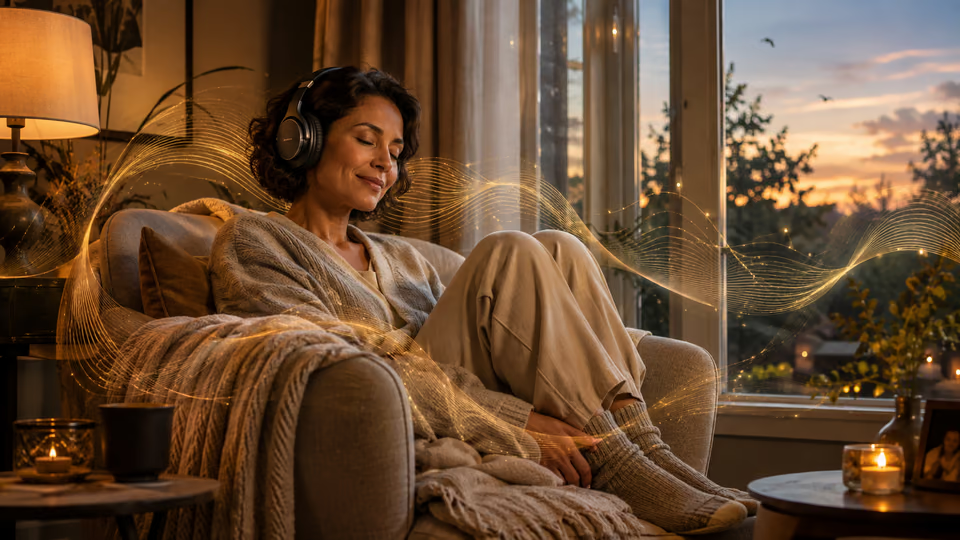
A guided voice can help when anxious thoughts make it hard to remember what comes next. You do not have to lead the practice or watch the clock. You can simply listen, follow one cue at a time, and return when your attention wanders.
Use guided meditation when you want reassurance, a clear beginning and ending, gentle breath or body cues, or a familiar voice to help you feel less alone in the practice.
Add Gentle Yoga When Anxiety Feels Physical
Sometimes anxiety is not only in the mind. It is in the shoulders, jaw, chest, stomach, hips, and hands. If sitting still feels too hard, move first.
Try two minutes of gentle yoga before your five-minute meditation: slow shoulder rolls, cat-cow with the breath, child’s pose, a seated forward fold with bent knees, or supported rest with a pillow under your knees.
For emotional support through movement, read Yoga for Emotional Balance. For bedtime movement, visit Gentle Yoga Before Bed and Restorative Yoga for Sleep.
A 5 Minute Meditation for Anxiety Before Sleep
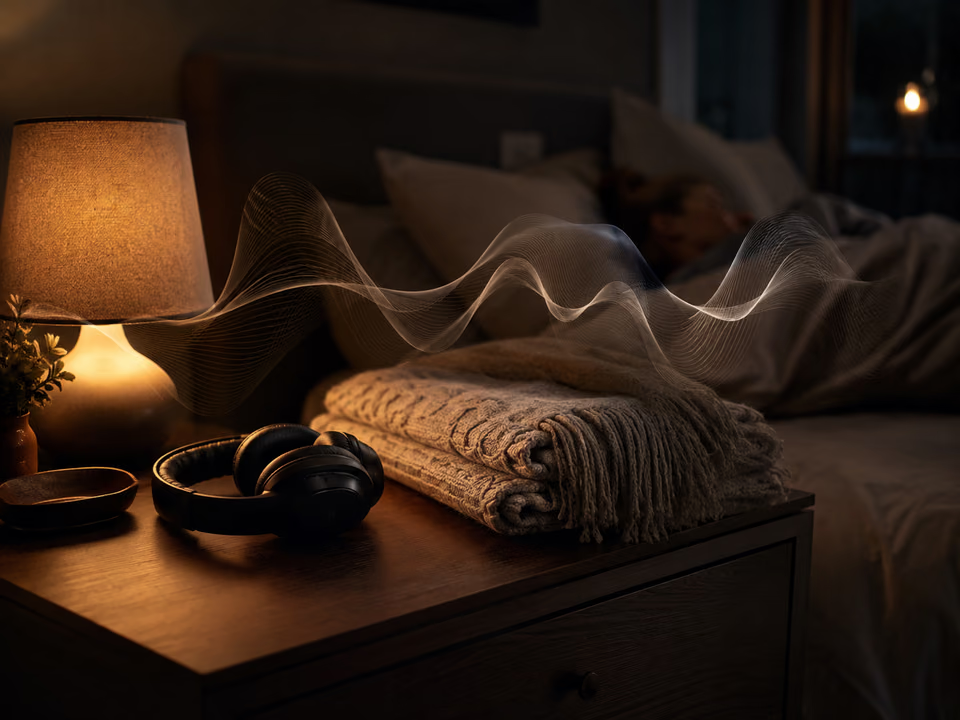
If anxiety shows up at night, use a softer version. Lie down in bed, let the room be dim, and play a calming guided meditation or soundscape.
- Minute 1Feel the bed holding you.
- Minute 2Notice your breath without changing it.
- Minute 3Write down or name the thought that keeps repeating.
- Minute 4Return to the sound or guided voice.
- Minute 5Repeat: “For tonight, this can wait.”
You are not trying to force sleep. You are creating a bridge between the day and rest. For more support, read How to Calm Anxiety Before Sleep and Meditation for Racing Thoughts at Night.
Play a 5-Minute Meditation With SoulFul GLO
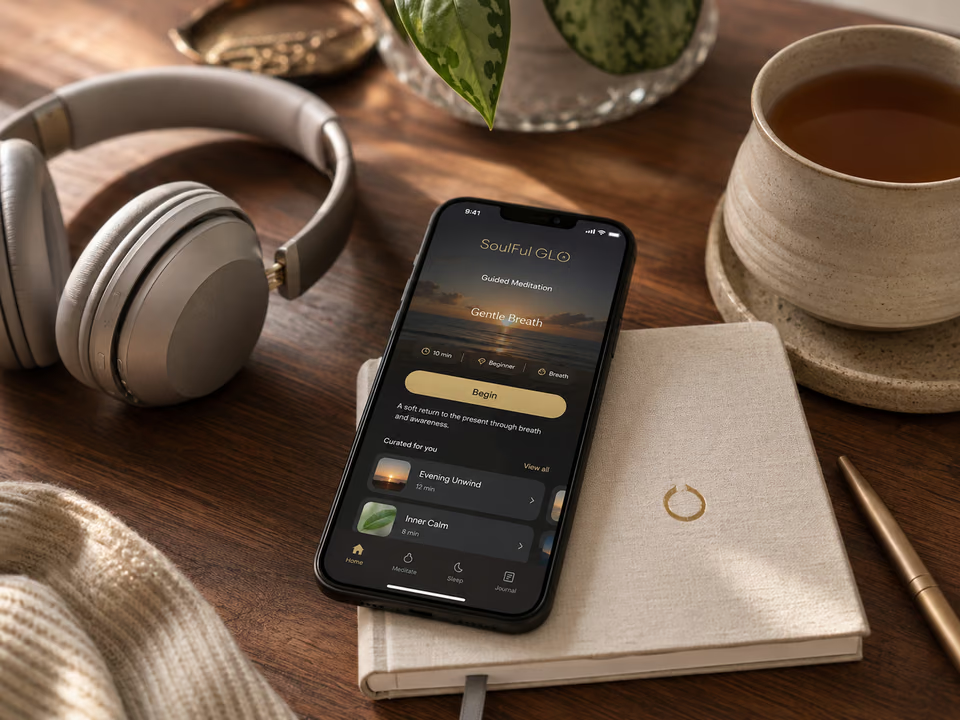
SoulFul GLO helps you create short calming rituals for anxious moments. Inside SoulFul GLO, you can play guided meditations, use sound journeys as anchors, pair breath with calming audio, journal after meditation, practice gentle yoga, build a bedtime routine, and return to yourself in small moments.
You do not need a perfect practice. You can start with five minutes. One breath. One sound. One guided voice. One moment of returning.
Frequently Asked Questions
Can a 5 minute meditation help with anxiety?
A 5 minute meditation may help create a short pause, give your attention a calming anchor, and support emotional self-care during anxious moments. It is not a cure or a replacement for professional support, but it can be a helpful practice.
Is five minutes enough for meditation?
Five minutes is enough to begin. A short meditation can be especially useful if you are new to meditation, busy, or feeling anxious. Consistency often matters more than length.
What should I focus on during a 5 minute meditation for anxiety?
Focus on one simple anchor: breath, body support, a guided voice, calming sound, or a phrase. When your mind wanders, return gently.
What if I cannot calm my mind in five minutes?
That is okay. The goal is not to force calm. The goal is to notice what is happening and return to your anchor. Even noticing a busy mind is part of meditation.
Should I use guided meditation or meditate silently?
Use guided meditation if you want structure and reassurance. Use silent meditation if you prefer quiet. If silence feels too difficult, try calming sound or a guided voice.
Can I do a 5 minute meditation before sleep?
Yes. A short meditation before sleep can become part of a bedtime ritual. Pair it with dim lighting, calming sound, and a gentle phrase like “For tonight, this can wait.”
Can I meditate if I feel restless?
Yes. If sitting still feels hard, try gentle movement first. A few shoulder rolls, child’s pose, or supported rest can help the body prepare.
How often should I do a 5 minute meditation?
You can practice daily, a few times a week, or whenever anxiety feels loud. Start with what feels realistic rather than forcing a strict schedule.
Final Takeaway
A 5 minute meditation for anxiety is not too small to matter.
It can be the pause between worry and reaction. The breath between one thought and the next. The moment your body remembers it is supported. The sound that gives your mind somewhere softer to land.
You do not need to meditate perfectly. You only need to begin.
With SoulFul GLO, five minutes can become a gentle ritual of return: guided meditation, calming sound, yoga, journaling, and self-discovery woven into one soft place to come back to yourself.
Begin Your Five-Minute Pause
One breath, one sound, one guided voice, and one moment of returning.
Wellness note: This article supports general wellbeing and self-care. Meditation is not medical treatment or a substitute for qualified medical or mental health care.