
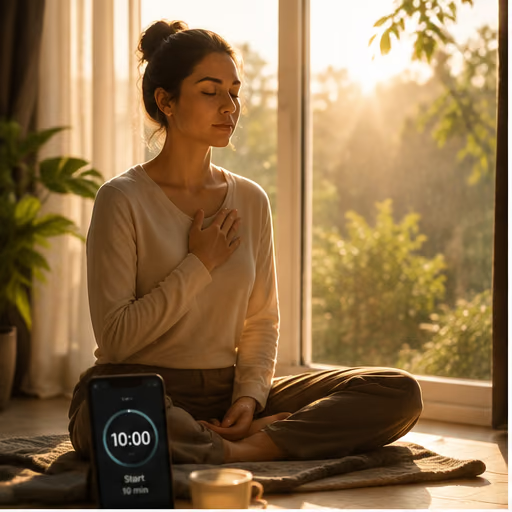
Ten minutes can feel both small and impossible.
Small, because anxiety can make everything feel bigger than a timer. Impossible, because when your chest feels tight and your thoughts are moving quickly, sitting still for even a few minutes can feel like a lot.
That is why a 10 minute meditation for anxiety should not feel like a test. It is not about emptying your mind, proving you are good at meditation, or forcing yourself to become calm before the timer ends.
It is a guided pause. A short place to land. A way to give your attention something softer than the anxious thought.
When anxiety is loud, the mind often wants certainty, answers, and control. A 10-minute meditation gently asks for something different: one breath, one sensation, one sound, one moment of returning.
At SoulFul GLO, meditation is part of a deeper emotional wellness experience. Guided meditation, sound journeys, gentle yoga, journaling, and self-discovery practices come together to help you return to yourself in a way that feels soulful, realistic, and kind.
Quick Answer: How Do You Do a 10 Minute Meditation for Anxiety?
To do a 10 minute meditation for anxiety, sit or lie down comfortably, let the body feel supported, notice the breath, name what is happening, choose one anchor, and gently return to that anchor whenever the mind wanders.
- Minute 1: Get comfortableLet yourself arrive without needing to fix anything.
- Minute 2: Feel the body supportedNotice where your body meets the floor, chair, or bed.
- Minute 3: Notice the breathObserve it without forcing it to change.
- Minute 4: Soften the exhaleLet each exhale become a little slower.
- Minute 5: Name anxious thoughts gentlyTry: “Worry is here” or “Planning is here.”
- Minute 6: Scan the bodyNotice what is asking for softness.
- Minute 7: Return to one anchorChoose breath, sound, hands, feet, or a guided voice.
- Minute 8: Add a calming phraseRepeat one supportive sentence slowly.
- Minute 9: Rest in sound or breathStop trying to improve the moment.
- Minute 10: Close slowlyNotice what feels even slightly softer.
The goal is not perfect calm. The goal is a gentle return.
What Is a 10 Minute Meditation for Anxiety?
A 10 minute meditation for anxiety is a short guided or self-led practice designed to help you pause, notice what is happening, and reconnect with a calmer anchor.
It may include breath awareness, body scanning, grounding, guided audio, calming sound, a gentle phrase, hand-on-heart breathing, mindfulness of thoughts, short visualization, or journaling afterward.
This type of meditation is helpful when you want more than a quick breath, but less than a long practice. It gives you enough time to settle, notice the body, return to the breath, and create a little space around anxious thoughts.
SoulFul GLO brings this short-practice idea into a warmer ritual space through guided meditation, sound journeys, journaling, and emotional reflection. Explore calming practices in the SoulFul GLO Guided Meditation Library.
Why 10 Minutes Can Be a Good Starting Point
Long meditation can feel intimidating when you are anxious. The mind is already busy. The body may feel restless. The breath may feel tight. The idea of sitting quietly for 30 minutes may create even more pressure.
Ten minutes is different. It is long enough to feel intentional, but short enough to be realistic.
You can fit it before starting work, after a difficult conversation, between meetings, during an afternoon reset, before sleep, after journaling, after gentle yoga, or whenever your thoughts feel too loud.
If 10 minutes feels possible today, begin there. If it feels like too much, start with three breaths. The practice is not the length. The practice is returning.
A 10 Minute Meditation for Anxiety You Can Try Now
Use this practice when you feel anxious, tense, overwhelmed, or mentally scattered. Sit in a chair, lie down, or rest against a wall. Keep your eyes open or closed.
Minute 1: Arrive
Let yourself stop. You do not need to fix anything yet. Notice the room, the light, the temperature, and the surface beneath you. Say silently: “I am here.” Let that be enough for the first minute.
Minute 2: Feel Support
Notice where your body is making contact: feet on the floor, back against the chair, body on the bed, hands resting, legs supported. You may say: “I do not have to hold everything right now.”
Minute 3: Notice the Breath
Bring attention to your breath without forcing it. Is it fast or slow, high or low, smooth or uneven, easy or tight? Whatever you notice is welcome.
Minute 4: Soften the Exhale
Gently lengthen the exhale. Inhale naturally. Exhale slowly. Pause for a moment, then repeat. If breathing becomes uncomfortable, shift attention to sound, hands, or body support.
Minute 5: Name What Is Here
Anxiety often feels larger when it stays unnamed. Gently name what is present: “Worry is here,” “Tightness is here,” “Planning is here,” “Fear is here,” or “Restlessness is here.” You are not judging. You are noticing.
Minute 6: Scan the Body
Move attention slowly through the forehead, jaw, shoulders, chest, belly, hands, hips, legs, and feet. You do not need to relax everything. Just notice what is asking for softness.
Minute 7: Choose One Anchor
Choose one place to return: the breath, a sound, your hands, your feet, a guided voice, the feeling of the chair, or the rise and fall of your chest. When the mind wanders, gently return.
Minute 8: Add a Calming Phrase
Repeat one phrase slowly: “I can take one moment at a time,” “I do not have to solve everything right now,” “This breath is enough,” “I am allowed to soften,” or “I can return.”
Minute 9: Rest in Sound or Breath
For this minute, stop trying to improve the moment. Listen. Breathe. Feel. If thoughts come, let them pass through the background and return to your anchor.
Minute 10: Close Slowly
Notice your body and the room again. Notice one thing you can hear, one thing you can feel, and one thing that feels even slightly softer. Take one final breath. You do not need to feel perfectly calm. You practiced returning. That counts.
Watch: 10 Minute Meditation for Anxiety
Use this video as a guided companion when you want a clear practice to follow.
Open the dedicated stress-relief video page.
When to Use a 10 Minute Anxiety Meditation
A 10-minute meditation can fit into real life without needing a perfect setup.
In the Morning
Use it before checking messages. Ask, “How am I arriving into this day?” Then breathe, listen, and let your mind land before the day begins.
During Work Stress
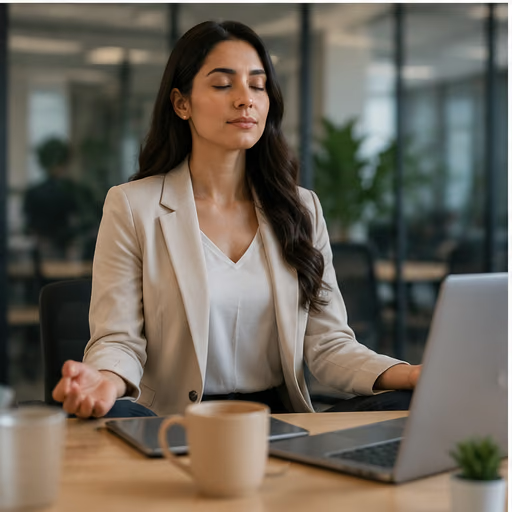
Use it between meetings or after a tense email. Let your body feel the chair. Return to your breath. Name what is present.
After a Hard Conversation
Use it before replaying every detail. Try: “That conversation happened. I am here now.”
Before Sleep
Use it when your body is tired but your mind is still busy. Pair it with low light, soft sound, or gentle journaling.
During Emotional Overwhelm
Use it when everything feels like too much. You do not need to process the whole feeling immediately. Begin with one anchor.
What If Your Mind Keeps Wandering?
Your mind will wander. That does not mean the meditation is not working.
A wandering mind is part of meditation. The practice is not keeping the mind perfectly still. The practice is noticing that the mind wandered and gently coming back.
If your mind wanders 20 times in 10 minutes, that is not 20 failures. That is 20 moments of awareness. When a thought appears, say: “Thinking.” Then return to breath, sound, or body.
Pair Your 10 Minute Meditation With Sound
Sound can make meditation easier when silence feels too wide. You might use soft ambient tones, gentle flute, birds in the distance, low grounding sounds, a guided voice, soulful sound journeys, or Peña-inspired textures.
At SoulFul GLO, sound is not treated as simple background music. It is part of the ritual. Peña-inspired Far East and Manipuri sound textures bring an earthy, human quality to meditation—raw, grounded, intimate, and connected to breath, body, and presence.
Learn more in Far East Healing Sounds and Sound Healing Meditation.
Journal After Meditation
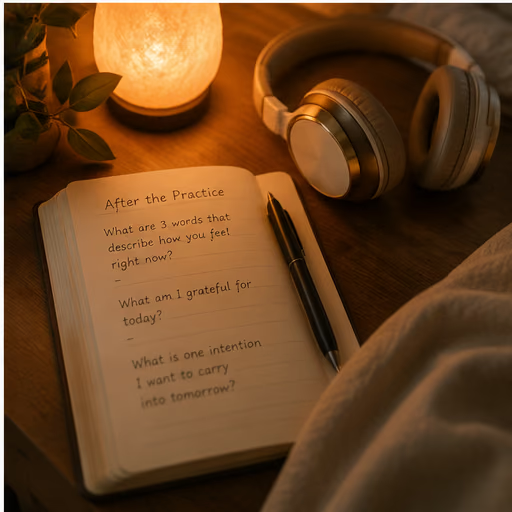
After a 10-minute meditation, journaling can help you understand what shifted. You do not need to write a full page. Try one sentence.
- What did I notice in my body?
- What thought kept returning?
- What softened, even slightly?
- What am I still carrying?
- What do I need today?
- What can I release for now?
- What is one small next step?
Use this three-line reflection: Before meditation, I felt… During meditation, I noticed… After meditation, I choose…
For more support, read Journaling After Meditation.
Add Gentle Yoga When Anxiety Feels Physical
Sometimes anxiety is not only mental. It shows up in the shoulders, jaw, chest, stomach, hands, and hips. If sitting still feels hard, move first.
Try two to five minutes of gentle yoga before meditating: slow shoulder rolls, cat-cow, child’s pose, a supported forward fold, or resting pose with a pillow under the knees. Then begin your 10-minute meditation.
For yoga and emotional support, read Yoga for Emotional Balance. For sleep-focused restoration, visit Restorative Yoga for Sleep.
10 Minute Meditation for Women Carrying Too Much
For many women, anxiety is not only about one thought. It can come from carrying too many invisible things: the planning, remembering, caregiving, emotional labor, pressure to respond, and expectation to keep everything together.
A 10-minute meditation can become a small space where nothing needs to be performed. You do not need to be productive, explain yourself, or solve everyone’s needs. You get to pause, breathe, and listen inward.
For more women-centered support, read Meditation for Women.
From Anxiety to Intention
A 10-minute meditation can also help you reconnect with what matters—not through forced positive thinking, but by gently asking: “What do I want to choose from here?”
After anxiety softens even a little, you may notice what your body needs next: rest, a boundary, a walk, a conversation, a glass of water, a journal entry, or a slower evening.
Explore intention more deeply in Manifestation Meditation and Calm Your Mind, Elevate Your Life.
Start a 10-Minute Meditation With SoulFul GLO
SoulFul GLO helps you create calming rituals for anxious moments. Inside SoulFul GLO, you can start guided meditations, explore calming sound journeys, use sound as an anchor, journal after meditation, practice gentle yoga, build a daily reset ritual, and return to yourself in small, meaningful moments.
You do not need a perfect practice. You can begin with 10 minutes. One breath. One sound. One guided voice. One gentle return.
Related SoulFul GLO Guides
- Meditation for Women
- Journaling After Meditation
- Sound Healing Meditation
- Far East Healing Sounds
- Yoga for Emotional Balance
- Restorative Yoga for Sleep
Frequently Asked Questions
Can a 10 minute meditation help with anxiety?
A 10 minute meditation may help create a pause, give anxious thoughts a softer anchor, and support emotional self-care. It is not a cure or a replacement for professional support, but it can be a helpful practice during anxious moments.
Is 10 minutes enough for meditation?
Yes. A short meditation can be meaningful because it is realistic, repeatable, and easier to fit into daily life than a long session.
What should I focus on during a 10 minute meditation for anxiety?
Focus on one simple anchor: breath, body support, calming sound, a guided voice, or a phrase. When your mind wanders, gently return.
What if I cannot calm my mind in 10 minutes?
That is okay. The goal is not to force calm. The goal is to notice what is happening and return gently. Even noticing a busy mind is part of the practice.
Should I use guided meditation or meditate silently?
Use guided meditation if you want structure and reassurance. Use silent meditation if quiet feels supportive. If silence makes thoughts louder, try calming sound or a guided voice.
Can I do a 10 minute meditation before sleep?
Yes. Pair it with dim light, calming sound, journaling, or gentle yoga.
Can I meditate if I feel restless?
Yes. If sitting still feels difficult, try gentle movement first. Shoulder rolls, child’s pose, or supported rest can help the body prepare.
How often should I do a 10 minute meditation?
Practice daily, a few times a week, or whenever anxiety feels loud. A realistic rhythm is better than forcing a strict routine.
Is meditation a replacement for therapy?
No. Meditation can support self-care, but it is not a replacement for therapy, medical care, or mental health treatment. If anxiety regularly affects your sleep, relationships, work, or daily life, consider speaking with a qualified professional.
Final Takeaway
A 10 minute meditation for anxiety is not about becoming perfectly calm. It is about creating a place to return: a breath, a sound, a phrase, a supported body, and a small pause between the anxious thought and your next step.
You do not need to meditate perfectly. You only need to begin.
With SoulFul GLO, 10 minutes can become a gentle ritual of return—guided meditation, calming sound, yoga, journaling, and self-discovery woven into one soft place to come back to yourself.
Begin Your Ten-Minute Reset
One breath, one sound, one guided voice, and one gentle return.
Wellness note: This article supports general wellbeing and self-care. Meditation is not medical treatment or a substitute for qualified medical or mental health care.