
Modern life does not usually ask for your attention gently. It pulls, pings, interrupts, and stacks one demand on top of another. By the end of the day, the mind can feel scattered even when nothing dramatic happened.
Calm is not about escaping your life. It is about returning to yourself inside it. When you pause, choose one intention, and give your attention a clear place to land, your nervous system gets a different message: there is space here. You can breathe. You can begin again.
This guide shows you how to move from distraction to presence using a simple SoulFul GLO ritual: set your intention, choose one practice, create a quiet space, and repeat a small action long enough for it to become familiar.
Quick Answer: How Do You Calm Your Mind and Focus With Intention?
Start with a small ritual you can complete in 5-10 minutes:
- Set your intentionAsk, "What do I need most right now - calm, focus, release, or rest?"
- Choose one practicePick a Sound Journey, guided meditation, gentle yoga flow, or journal prompt.
- Protect the spaceDim distractions, silence alerts, and use headphones if they help you settle.
- Breathe and beginTake 5 slow breaths before pressing play or starting movement.
- Reflect for 30 secondsNotice one shift: breath, jaw tension, mood, clarity, or energy.
Quick Links
- Explore Sound Journeys →
- Choose the Right Practice →
- Build a Daily Wellness Ritual →
- Start SoulFul GLO Unlimited →
Why Calm Changes the Way You Move Through the Day
A calm mind is not empty. It is available. You can still think, plan, create, respond, and take action - but you are not being pushed around by every notification, worry, or emotional wave.
When calm becomes a daily cue, three things often shift:
- You notice sooner. You catch tension, rushing, or spiraling before it takes over.
- You choose more clearly. Instead of doing everything, you choose the next supportive step.
- You recover faster. A familiar practice gives your mind and body a path back to center.
This is why small rituals matter. They turn calm from an idea into a repeatable action.
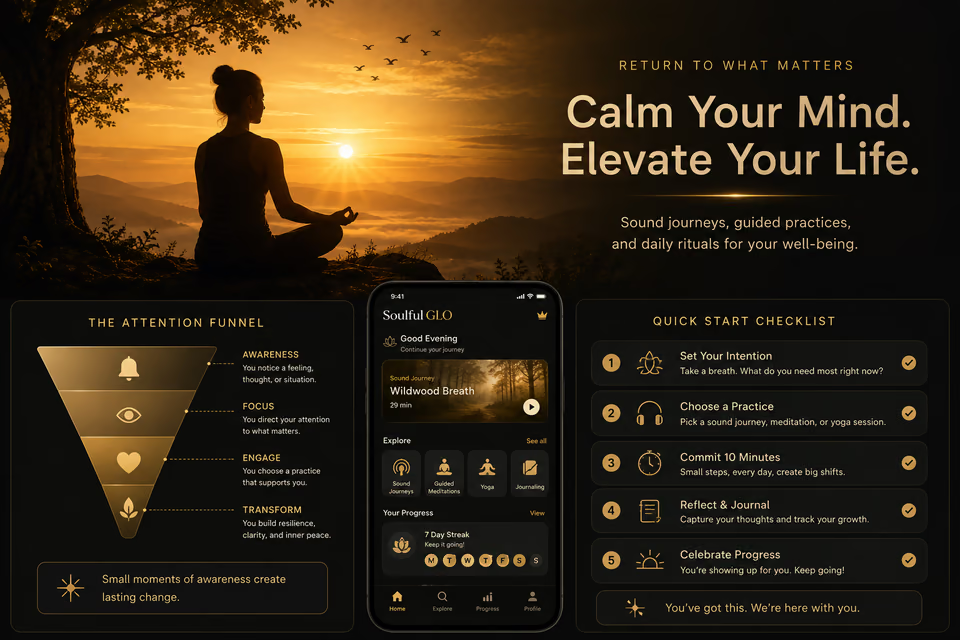
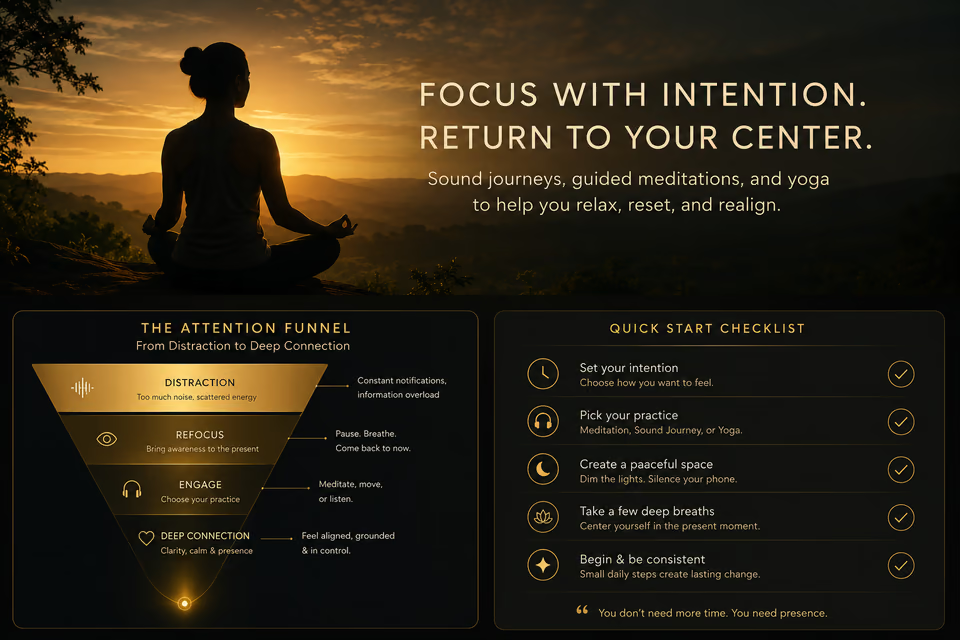
The Attention Funnel: From Distraction to Deep Presence
Think of attention as moving through a funnel. At the top, there is noise: thoughts, messages, tabs, chores, pressure, and emotional static. The goal is not to judge the noise. The goal is to gently narrow your focus.
- DistractionYou notice the mind is scattered, overstimulated, or pulled in many directions.
- RefocusYou pause, breathe, and choose one point of attention.
- EngageYou enter a practice: listening, meditating, moving, or journaling.
- Deep connectionYou feel more grounded, clear, and present.
Step 1: Set Your Intention
Before choosing a practice, name what you are actually asking for. This keeps the routine from becoming another task.
Try one of these intention prompts:
- "I want to calm my body."
- "I want to clear my mind before work."
- "I want to release the day."
- "I want to feel steady before I respond."
- "I want to rest without trying so hard."
Your intention does not need to sound polished. It just needs to be honest.
Step 2: Choose the Practice That Matches Your State
Different states need different support. Use this simple guide:
- Busy mind: choose a steady Sound Journey with minimal variation.
- Anxiety or nervous energy: choose guided breathing or a short grounding meditation.
- Low energy: choose gentle yoga or a warm, uplifting soundscape.
- Emotional heaviness: choose slow movement, journaling, or a comforting audio practice.
- Bedtime restlessness: choose a soft sleep soundscape and a low-volume timer.
If you are unsure, start with sound. It gives attention a single thread to follow without asking you to perform.
Step 3: Create a Peaceful Space
Your environment does not need to be perfect. It needs fewer interruptions.
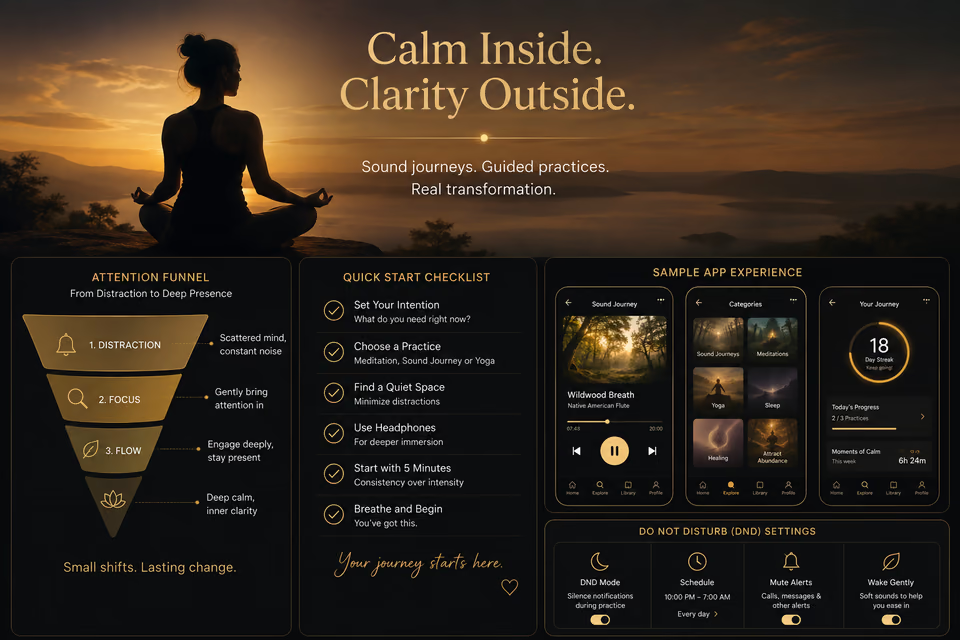
- Turn on Do Not Disturb for the next 5-20 minutes.
- Lower the lights if you are practicing in the evening.
- Use headphones for deeper immersion, or a speaker for a softer room feel.
- Place your phone face-down after the practice starts.
- Choose one place to practice often enough that it becomes familiar.
Consistency does a quiet kind of work. The more often your body meets the same cue, the faster it recognizes the path back to calm.
Step 4: Start With Five Minutes
Long routines are beautiful when you have time. But for real life, five minutes is often the doorway.
The 5-minute calm reset
- Take 5 slow breaths.
- Play a steady Sound Journey or begin a short meditation.
- Relax your jaw, shoulders, and hands.
- Let one thought pass without following it.
- End by naming one word for how you feel now.
This is not too small. It is small enough to repeat, and repetition is what teaches the body.
Step 5: Build a Daily Ritual Without Overthinking It
A daily ritual works best when it has a simple shape. Use this template:
- Morning clarity, 5-10 minutesSet an intention and choose a gentle focus Sound Journey.
- Midday reset, 3-8 minutesUse breathwork or a grounding meditation between tasks.
- Evening downshift, 10-20 minutesUse yoga, journaling, or a calming soundscape to close the day.
- Bedtime support, 15-30 minutesPlay a sleep-friendly soundscape at low volume with a timer.
You do not need all four every day. Pick one anchor time and let it become yours.
Sample SoulFul GLO Rituals You Can Try
For a scattered morning
Set one intention, play a 10-minute focus Sound Journey, and write one sentence: "Today I return to..."
For an anxious afternoon
Turn on Do Not Disturb, take 10 slow breaths, then use a short guided meditation or grounding soundscape.
For low energy
Choose gentle yoga or mindful movement first, then play a warm soundscape while you transition back into the day.
For evening overwhelm
Dim lights, place your phone away from reach, and use a calming Sound Journey with a 20-minute timer.
Common Mistakes That Make Calm Harder
Mistake 1: Trying to fix everything at once
Try instead: choose one state and one practice. Calm grows through focus.
Mistake 2: Picking a practice that is too intense for your mood
Try instead: if you are overstimulated, choose simple, steady, low-variation sound.
Mistake 3: Practicing only when things are already difficult
Try instead: practice on ordinary days too. That is how the cue becomes familiar.
Mistake 4: Judging your mind for wandering
Try instead: treat wandering as part of the practice. The return is the training.
FAQ
What is the fastest way to calm my mind?
Start with your body: slow your exhale, relax your jaw and shoulders, and give attention one simple anchor, such as a steady soundscape or breath count.
Can sound journeys help with focus?
They can support focus by creating a stable listening environment and giving the mind a gentle thread to follow. Keep the volume low enough that it supports attention without taking over.
Should I meditate, listen to sound, or do yoga?
Choose by state. Busy mind: sound. Anxiety: guided breathing or meditation. Tense body: yoga or movement. Restlessness at night: sleep soundscape.
How long should a daily ritual be?
Begin with 5-10 minutes. A short ritual you repeat is more useful than a long routine you avoid.
Start Your Calm Ritual With SoulFul GLO
Calm inside creates clarity outside. Begin with one intention, one practice, and one repeatable moment of presence.
Begin With One Calm Moment
Open SoulFul GLO and choose a sound journey, guided practice, or movement ritual for how you want to feel now.
Wellness note: SoulFul GLO supports general well-being and is not medical advice or treatment. If you are experiencing ongoing distress, sleep disruption, or mental health concerns, consider reaching out to a qualified professional.