

Anxiety can make your thoughts feel tangled.
One thought turns into another. One worry becomes a list. One small moment from the day keeps replaying. Your body feels tense, but your mind keeps trying to explain why. You want clarity, but everything feels too loud inside.
That is where journaling prompts for anxiety can help.
Not because journaling magically fixes everything. It does not. And it should not be treated as a replacement for professional support if anxiety is intense, ongoing, or affecting your daily life.
But writing can give anxious thoughts somewhere to go. A journal page can hold the loop for a while. It can help you name what is happening, notice what you need, and choose one small next step instead of carrying everything in your head.
At SoulFul GLO, journaling is part of a wider emotional wellness ritual: guided meditation, sound journeys, self-discovery, and gentle reflection. The practice is simple. You pause. You listen inward. You write what is true enough for this moment.
You do not need perfect words. You only need a place to begin.
Quick Answer: What Are Good Journaling Prompts for Anxiety?
Good journaling prompts for anxiety are questions that help you name what you are feeling, identify what triggered it, notice what your body needs, and choose one small next step.
- What am I feeling right now?
- What thought keeps repeating?
- What am I afraid might happen?
- What is actually true in this moment?
- What does my body need?
- What can wait until tomorrow?
- What is one small thing I can do next?
The goal is not to write beautifully. The goal is to move anxious thoughts from a loop in your mind onto a page where you can see them more clearly.
What Are Journaling Prompts for Anxiety?
Journaling prompts for anxiety are guided questions that help you explore anxious thoughts, stress, worry, and emotional overwhelm.
When anxiety is loud, starting with a blank page can feel hard. You may not know what to write. You may write the same worry over and over. Or you may avoid writing because the feeling seems too big.
Prompts make the page easier to enter. They give you a doorway. Instead of asking yourself to explain everything, a prompt asks for one honest response.
For example, “What thought keeps repeating?” is easier than “Write about your anxiety.” A good prompt does not pressure you to solve your whole life. It helps you slow down enough to notice what is here.

How Journaling Can Help When Anxiety Feels Tangled
Anxiety often becomes heavier when everything stays in the mind. Thoughts repeat because they are trying to protect you, prepare you, or prevent something uncomfortable. But when the thoughts stay unspoken, they can feel larger than they are.
Journaling Helps You Name the Thought
A worry can feel huge until you write it down. Sometimes seeing the sentence on paper helps you realize: “This is the thought I keep circling.” That alone can create space.
Journaling Helps You Separate Feeling From Fact
Anxiety can make a possibility feel like a certainty. Writing can help you ask: “What do I feel?” and “What do I know?” Both matter, but they are not always the same.
Journaling Helps You Find the Next Step
Anxiety often asks for a complete solution. Journaling can bring you back to one small step: drink water, send one message, rest for five minutes, ask for help, write the list, or put something down for tonight. Small steps count.
Journaling Can Support Meditation
If your mind feels too busy to meditate, write first. If meditation brings up insight, write after. SoulFul GLO pairs journaling with guided meditation so reflection feels less like mental work and more like a ritual of return.
Explore calming practices in the SoulFul GLO Guided Meditation Library.
A Gentle Journaling Practice for Anxiety
Use this when you feel overwhelmed and do not know where to begin. Set a timer for five minutes. Write in a notebook, notes app, or inside your SoulFul GLO ritual.
- Minute 1: Write what is hereStart with: “Right now, I notice…” Write whatever comes. No editing. No judging.
- Minute 2: Name the repeating thoughtAsk: “What thought keeps coming back?” Write it as simply as possible.
- Minute 3: Separate feeling from factWrite two lines: “What I feel…” and “What I know…”
- Minute 4: Ask what you needAsk: “What would support me in the next ten minutes?” Not the whole day. Just ten minutes.
- Minute 5: Choose one gentle stepFinish with: “One small step I can take is…” That is enough.
This practice is not about perfection. It is about giving the anxious mind a little more room.
Watch: 10 Minutes to Relieve Stress and Find Calm
Use this calming video before writing when you want to settle the body and give anxious thoughts a little more space.
Open the dedicated stress-relief video page.
50 Journaling Prompts for Anxiety
Use these prompts slowly. You do not need to answer all of them. Choose one that feels useful today.
Prompts for When Anxiety Feels Loud
- What am I feeling right now?
- What thought keeps repeating?
- What am I afraid might happen?
- What am I trying to control?
- What feels uncertain?
- What is asking for my attention?
- What is the loudest thought in my mind?
- What does this anxiety want me to notice?
- What am I carrying that is not mine?
- What would help me feel one percent safer right now?
Prompts for Overthinking
- What am I replaying?
- What question am I trying to answer again and again?
- Is this thought asking for action, rest, or reassurance?
- What is one thing I know for sure?
- What is one thing I do not know yet?
- What story am I adding to the facts?
- What would I say to a friend who had this thought?
- What is the simplest next step?
- What can I stop solving for the next hour?
- What would change if I did not believe this thought completely?
Prompts for Nighttime Anxiety
- What am I still carrying from today?
- What can wait until tomorrow?
- What did I do my best with today?
- What thought do I not want to take into sleep?
- What would help my body feel more supported tonight?
- What can I gently release for now?
- What is one thing I handled today?
- What does rest mean tonight?
- What do I want to tell my future self in the morning?
- What phrase would help me close the day?
For nighttime support, pair journaling with Sound Healing Meditation.
Prompts for Body Tension
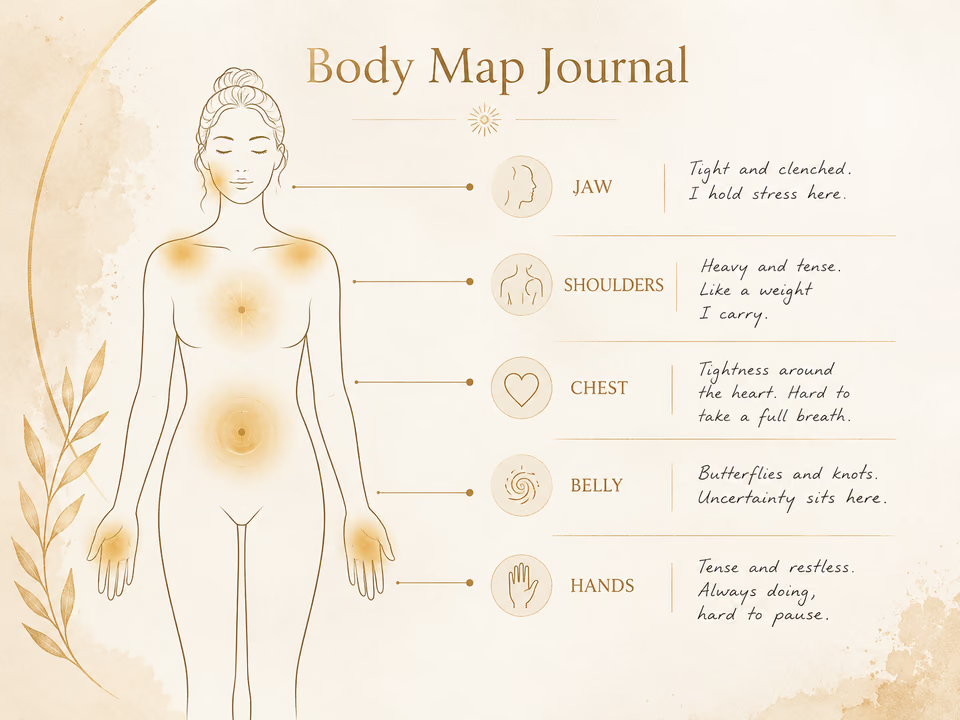
Anxiety is not always only in the mind. Sometimes the body speaks first. Use these prompts when your shoulders, jaw, chest, stomach, or hands feel tense.
- Where do I feel anxiety in my body?
- If this tension had words, what would it say?
- What part of my body needs softness?
- What am I bracing for?
- What would help my body feel held?
- What movement would feel kind right now?
- What happens if I unclench my jaw and exhale?
- What is my body asking me to stop ignoring?
- What sensation feels neutral or steady?
- How can I support my body for the next five minutes?
Prompts for Self-Compassion
Anxiety often comes with self-criticism. These prompts help soften the inner voice.
- What am I blaming myself for?
- What would kindness sound like right now?
- What am I doing better than I realize?
- Where am I expecting perfection?
- What would I tell someone I love?
- What part of me needs reassurance?
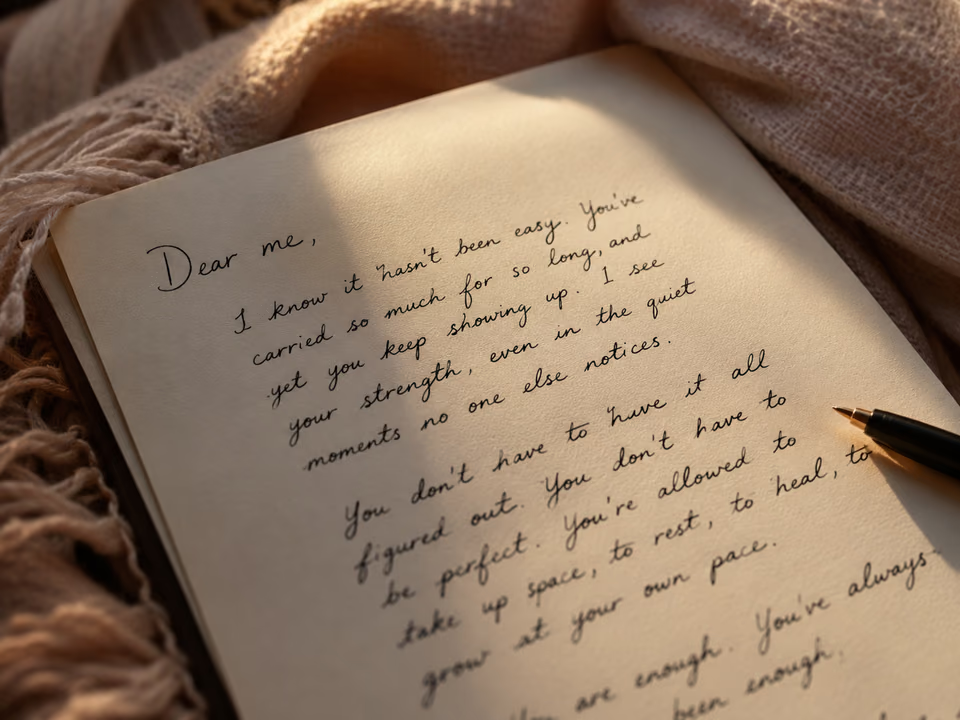
- What am I allowed to not have figured out yet?
- What did I survive that I have not given myself credit for?
- What does my softer self want me to remember?
- What is one sentence of forgiveness I can offer myself?
Prompts After Meditation
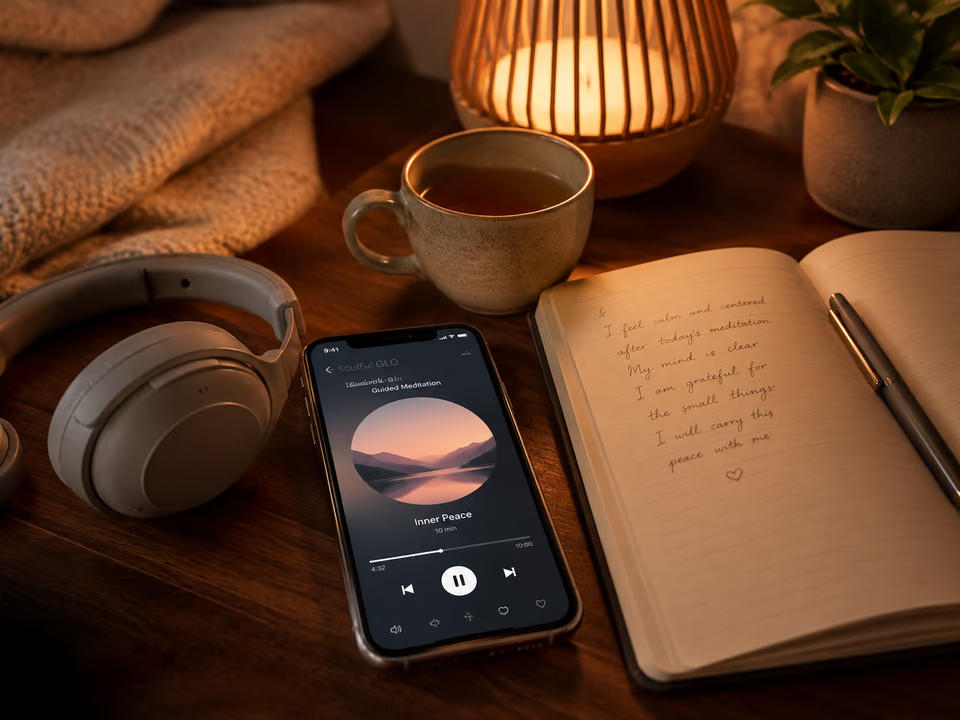
Journaling after meditation can help you capture what surfaced. Sometimes meditation does not give you an answer. It gives you a feeling, image, memory, body sensation, or small realization.
- What did I notice during meditation?
- What thought kept returning?
- What softened in my body?
- What emotion appeared?
- What did I resist?
- What felt easier than expected?
- What do I want to carry forward?
- What do I want to release?
- What is one small step from here?
- What did the quiet show me?
For a deeper guide, read Journaling After Meditation.
Pair Journaling With Sound or Guided Meditation
Journaling can feel even more supportive when paired with sound. If your mind is racing, start with a guided meditation. If your body feels tense, listen to a sound journey first. If you feel emotionally heavy, write after listening. If you feel scattered, use sound as an anchor while you journal.
SoulFul GLO’s sound world includes Far East-inspired textures and Peña-inspired sound journeys that bring an earthy, human, grounded quality to the practice.
Learn more in Far East Healing Sounds, Sound Healing Meditation, and Calm Your Mind, Elevate Your Life.
Journaling for Women Carrying Too Much
For many women, anxiety is not just one thought. It is the mental list, emotional labor, planning, remembering, caregiving, pressure to respond, and quiet expectation to hold everything together.
Journaling can become a private place where you do not have to perform. You can write the messy truth, admit what feels heavy, notice what you need, and hear yourself again.
For more women-centered support, read Meditation for Women.
Journaling and Manifestation
Anxiety often focuses on what could go wrong. Manifestation journaling, when done gently, can help you ask a different question: “What do I want to move toward?”
This is not about pretending fear does not exist. It is about letting your desires have a voice too.
- What do I want to feel more of?
- What kind of life am I trying to create?
- What belief is making that feel difficult?
- What small action would support that intention?
- What would alignment look like today?
For more, read Manifestation Meditation.
Open Journal Prompts With SoulFul GLO
SoulFul GLO helps you turn anxious thoughts into a softer ritual of reflection. Inside SoulFul GLO, you can open guided journal prompts, pair journaling with meditation, listen to sound journeys, reflect after emotional moments, use self-discovery practices, create calming routines, and return to yourself one prompt at a time.
You do not need to write perfectly. You can begin with one sentence. One honest line. One small truth. One gentle question. One moment of listening inward.
Related SoulFul GLO Guides
- Journaling After Meditation
- Meditation for Women
- Manifestation Meditation
- Sound Healing Meditation
- Far East Healing Sounds
- Calm Your Mind, Elevate Your Life
Frequently Asked Questions
What are good journaling prompts for anxiety?
Good journaling prompts help you name what you feel, identify repeating thoughts, separate feelings from facts, and choose one small next step. Examples include “What am I feeling right now?” and “What can wait until tomorrow?”
Does journaling help with anxiety?
Journaling may help anxious thoughts feel less tangled by moving them from the mind onto the page. It is not a cure or replacement for professional support, but it can be a helpful self-care practice.
What should I write when I feel anxious?
Start with one simple sentence: “Right now, I notice…” Then write whatever comes. You can also ask, “What thought keeps repeating?” or “What does my body need?”
Is journaling better before or after meditation?
Both can help. Journaling before meditation can clear mental clutter. Journaling after meditation can help you reflect on what surfaced during the practice.
What if journaling makes me more anxious?
Use softer prompts and keep the session short. Try writing for three minutes, then close with: “What would support me right now?” If journaling feels overwhelming, pause and seek support if needed.
How often should I journal for anxiety?
Start with what feels realistic. Journal daily, a few times a week, or only when anxiety feels loud. A consistent, gentle rhythm is better than forcing a strict routine.
Can I journal on my phone?
Yes. A notebook, notes app, or guided journaling tool can all work. The most important thing is having a place where your thoughts can land.
Can SoulFul GLO help with journaling prompts?
Yes. SoulFul GLO supports emotional wellness through guided meditation, journaling, sound journeys, and self-discovery practices that help you reflect and return to yourself.
Final Takeaway
Journaling prompts for anxiety are not about writing the perfect answer. They are about giving your mind somewhere to place what it has been carrying: a repeated thought, a tight feeling, a small fear, a question you cannot solve yet, or a truth you have not said out loud.
One prompt can create space. One sentence can soften the loop. One page can help you hear yourself more clearly.
With SoulFul GLO, journaling becomes part of a deeper ritual—guided meditation, sound journeys, emotional reflection, and self-discovery woven together to help you return to yourself.
Begin With One Honest Line
Give anxious thoughts somewhere softer to land.
Wellness note: This article supports general wellbeing and self-care. Journaling is not medical treatment or a substitute for qualified medical or mental health care.