
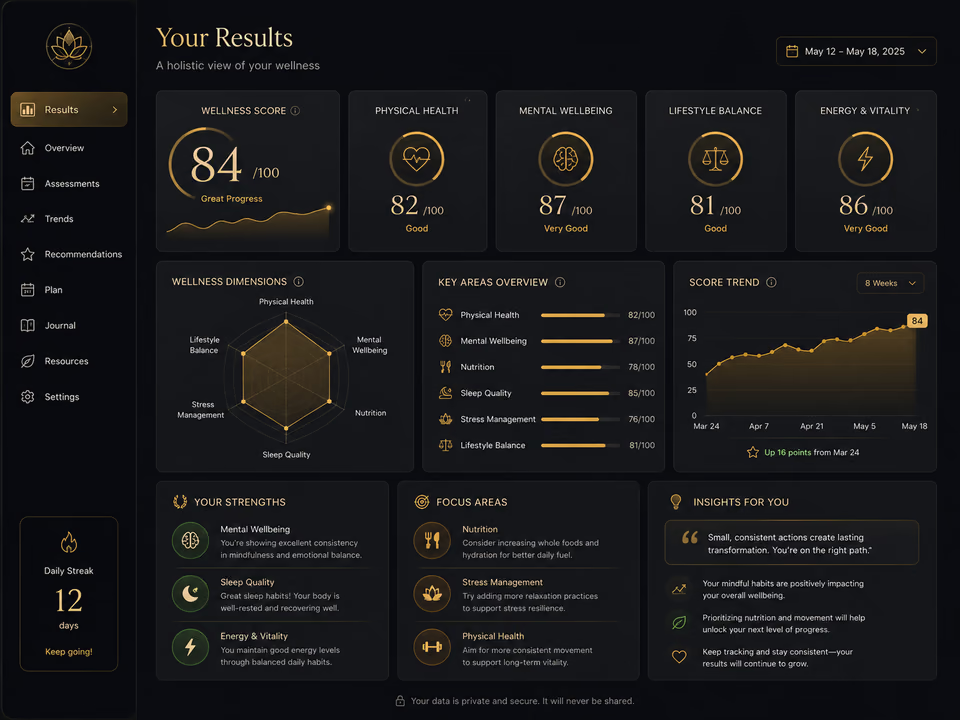
A good wellness quiz should not make you feel graded. It should make you feel seen.
The purpose of an assessment is not to label you. It is to help you notice patterns - how you communicate, how you recover from stress, how safe you feel emotionally, how consistent your routines are - and then translate those insights into small, realistic next steps.
In SoulFul GLO, quizzes and assessments are designed to support self-discovery. They help you understand where you are today, what you might need more of, and what a gentle growth path could look like over the next two weeks.
Quick Links
What Wellness Quizzes Measure
Wellness assessments are most helpful when you understand what they are trying to capture. Most supportive assessments look at patterns across areas like stress response, emotional awareness, communication, boundaries, alignment, and habit consistency.
Stress response and recovery
How quickly you return to baseline after stress, and what helps you recover.
Emotional awareness
How well you can name what you feel, and how you tend to respond.
Communication and connection
How you express needs, repair conflict, and build trust with others.
Boundaries and alignment
Whether your daily choices match your values and capacity.
Habit consistency
How steady your routines are and what tends to interrupt them.
In relationship-focused assessments specifically, it is common to see segments such as communication and listening, trust and emotional safety, conflict repair skills, intimacy and empathy, alignment, boundaries, and support.
What Quizzes Do Not Measure
A quiz is not a diagnosis. It does not define your worth, your future, or your identity. It is a snapshot - useful because it can reveal direction, not because it can prove anything about you.
If you are experiencing severe distress, persistent depression, or safety concerns, professional support is important. Wellness tools can complement help, but they should never replace it.
How to Interpret Results With Compassion
1. Treat scores as signals
A lower score usually means: "This area needs more support right now." A higher score usually means: "This is a strength you can rely on."
2. Look for one theme, not every flaw
Many people read results and try to fix everything. That creates burnout. Instead, identify your top strength and your top growth area. That is enough to guide a meaningful 14-day plan.
3. Remember that context matters
If you just had a hard week, your score may reflect that. If you are sleeping better, your score may rise. Results can shift as your life shifts. That is normal, and it is part of the point.

Example Scoring Bands
- 0-39: Needs support. This area may feel challenging right now. Start small and focus on safety and consistency.
- 40-69: Growing foundation. You have some stability here, but you may benefit from structure and practice.
- 70-100: Strong support. This is a strength. Use it as a stabilizer while you grow other areas.
You can also rename bands to match a gentler tone: Soft Start, Steady Growth, and Strong Anchor.
The Real Value: Turning Insight Into Action
A quiz becomes transformative when it answers two questions:
- What do I need most right now?
- What is the smallest step I can repeat?
That is why 14-day plans work well. Two weeks is long enough to feel change, short enough to stay realistic, and structured enough to reduce decision fatigue.
How to Build Your 14-Day Growth Plan
Step 1: Choose one growth theme
Pick the area with the lowest score, or the one that feels most urgent. Examples include communication and listening, emotional safety and trust, stress recovery, boundaries, sleep consistency, or self-compassion.
Step 2: Choose one anchor practice
Anchor practices should be small and repeatable, such as a 5-minute breath meditation, a short journaling prompt, a gentle sound journey, or a daily repair sentence in relationships.
Step 3: Create a two-week rhythm
Use this structure: Days 1-3 for awareness and tiny practice, Days 4-10 for repeat and deepen slightly, and Days 11-14 for reinforce and reflect. You are not trying to become a new person. You are trying to build a new pattern.
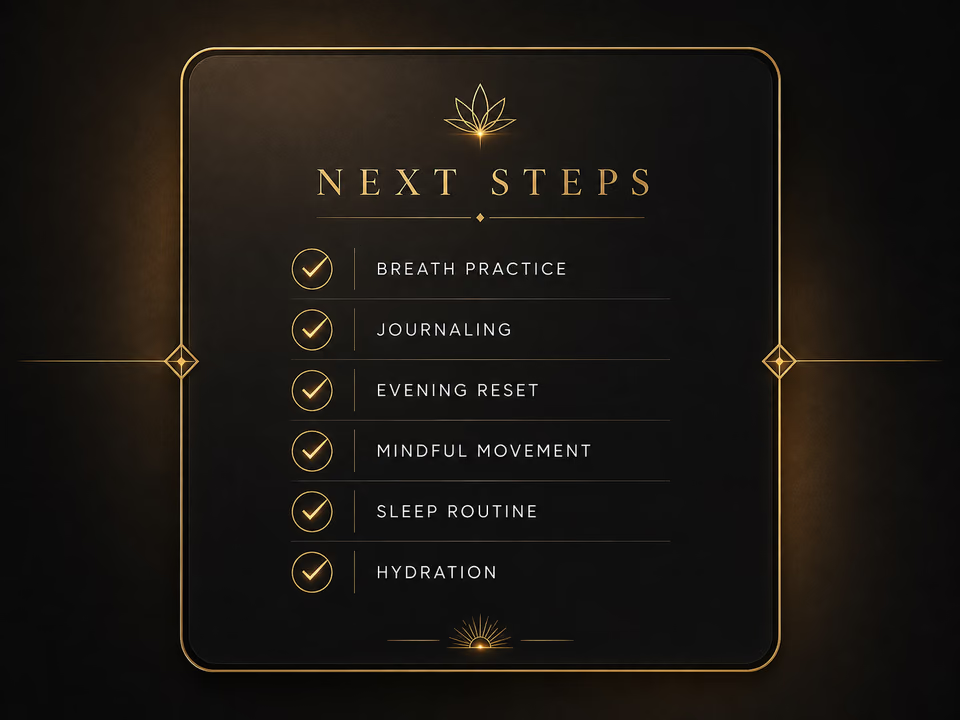
14-Day Plan Template
Days 1-3: Awareness, no pressure
Goal: Notice patterns without trying to fix them.
- 5 minutes: one calming practice, such as sound or meditation.
- 2 minutes: one reflection question: "What did I feel today?", "What triggered me?", or "What helped me return to calm?"
Optional support: explore calming Sound Journeys.
Days 4-10: Practice the same small step
Goal: Build repetition.
- 5-10 minutes: the same daily practice.
- One micro-skill: a single sentence or behavior you practice daily.
Examples: "Let me reflect what I heard," "I cannot do that today, but I can do...", or "I will take 10 slow breaths before responding."
Days 11-14: Reinforce and reflect
Goal: Keep what works and simplify what does not.
- 10-15 minutes: practice.
- 3 minutes: reflection on what changed, what feels easier, and what you want to continue next week.
Turning Common Quiz Themes Into Gentle Actions
- Communication and listening: Practice reflecting before responding: "What I am hearing is... did I get that right?"
- Trust and emotional safety: Practice one small integrity action: "I will do what I said I would do."
- Conflict skills and repair: Practice a repair phrase: "I am on your side. Can we try again?"
- Intimacy and empathy: Send one gratitude message: "I appreciated you when..."
- Alignment, boundaries, and support: Practice one boundary sentence: "I can do X, not Y."

How to Track Progress Without Pressure
The goal is not perfection. Track what supports you.
- Minutes practiced, even 5 counts.
- Consistency: how often you return, not whether you never miss.
- Mood shift before and after, using a simple -2 to +2 scale.
- One weekly insight, such as "I notice I spiral after..."
If your app includes streaks or badges, use them as encouragement, not a requirement. If you miss a day, your plan does not fail. You simply return.
Where to Start in SoulFul GLO
- Take an assessment from the Quiz Library.
- Choose one growth theme.
- Follow the 14-day plan template above.
- Pair your plan with calming Sound Journeys for regulation and consistency.
To unlock full access and premium tools, visit SoulFul GLO Unlimited.
Start SoulFul GLO Unlimited
Use supportive quizzes, sound journeys, and reflection tools to build a gentle 14-day growth plan.