

A sound journey is more than background music. It is an intentional listening practice - an immersive soundscape designed to guide your nervous system toward a calmer, clearer state. When you listen with purpose and pair it with a few minutes of gentle meditation, sound becomes a daily ritual you can return to, especially when life feels loud.
In this guide, you will learn what a sound journey is, how to use it for relaxation, and a simple 7-day plan combining sound and short meditation. You will also learn the most common beginner mistakes so your practice feels supportive instead of frustrating.
Quick Links
What Is a Sound Journey?
A sound journey is an immersive audio experience designed to shift your internal state through rhythm, texture, tone, and atmosphere. Unlike a standard playlist, sound journeys are typically structured with a beginning, middle, and end - helping you transition from busy mind to settled body.
Sound journeys often include:
- Ambient soundscapes such as water, wind, and forest textures.
- Layered tones or drones that create a steady grounding bed.
- Subtle melodic elements inspired by traditional instruments and cultural sound textures.
- A pacing that encourages downshifting, becoming slower, softer, and more spacious over time.
At SoulFul GLO, sound journeys are inspired by Far East healing sound traditions and instruments - crafted to feel calm, emotionally resonant, and deeply immersive. Explore Sound Journeys.
Why Sound Journeys Can Help With Calm, Focus, and Sleep
You do not need to do it perfectly for sound to help. The key is consistency and gentle attention.
For calm and stress relief
Sound can act like an anchor. When you are overwhelmed, your attention naturally spirals. A sound journey gives the mind a single place to return - again and again - without force.
For focus
Certain sound textures reduce mental clutter by creating a stable auditory environment. Many people find they can focus better with sound journeys than with silence.
For sleep
A sleep-friendly journey can support bedtime by reducing mental stimulation, easing physical tension, and creating a predictable winding-down rhythm.
If sleep is your primary goal, start with shorter sessions and build a consistent bedtime cue: same time, same environment, same audio style.

How to Use a Sound Journey: The Beginner Method
1. Choose your intention
Keep it to one sentence: "I want to release tension," "I want a calmer mind," or "I want to prepare for sleep."
2. Set your space
Choose headphones for a more immersive experience or speakers for a gentler bedtime feel. If you are worried about falling asleep, set a timer slightly longer than the track.
3. Add a short meditation bookend
This is the missing step for many beginners. The meditation is not meant to be deep. It is just a soft transition.
Try this micro-practice: inhale for a slow count of 4, exhale for a slow count of 6, and repeat for 10 breaths.
4. Listen like it is a practice, not noise
You are not trying to analyze the track. Gently notice texture, space, and rhythm. When your mind wanders, return to one element, such as the lowest tone or the background wash.
Beginner Mistakes and What to Do Instead
Mistake 1: Listening while multitasking
If your goal is calm or sleep, multitasking often keeps the nervous system in doing mode.
Try instead: Give it 5 minutes of full attention first. After that, if you want to fold laundry or stretch, do it slowly.
Mistake 2: Volume too loud
Loud sound can keep the body alert, even if the sound is relaxing.
Try instead: Set volume so it feels like a soft environment, not a performance. If you are using headphones, lower it one more notch than you think you need.
Mistake 3: Expecting instant transformation
Sound is not a switch; it is a ritual. Some days you will feel a big shift. Other days it will feel subtle.
Try instead: Measure success as: "Did I show up?" and "Do I feel 5% calmer?"
Mistake 4: Picking a session that does not match your state
If you are anxious, a highly intense or complex track may feel stimulating.
Try instead: Choose by mood: anxiety calls for steady, simple, low textures; low energy calls for warm, uplifting, gentle rhythm; sleep calls for slow, minimal, quiet tracks.
Mistake 5: Skipping the exit
Ending abruptly can bring you back into stress.
Try instead: Take 30 seconds after the track: one long inhale, one long exhale, and one word for how you feel now.
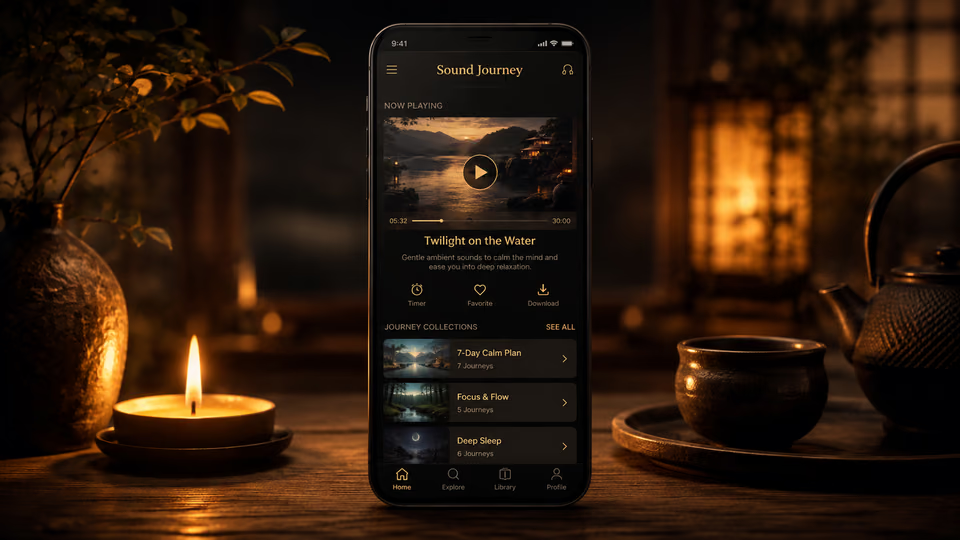
A Simple 7-Day Sound Journey Plan
This plan is designed to be realistic. Each day includes 2-5 minutes of meditation before, a 10-25 minute sound journey, and 30 seconds of reflection after. For a smoother experience, save each day's track into your favorites or playlist. Browse Sound Journeys.
- Day 1 - Start small: calm baselineMeditation: 10 slow breaths, 4 in and 6 out. Sound journey: 10-12 minutes of simple ambient textures. Reflection: "What tension do I feel most?"
- Day 2 - Body releaseMeditation: quick body scan through forehead, jaw, and shoulders. Sound journey: 12-15 minutes of warm grounding tones. Reflection: "Where did my body soften?"
- Day 3 - Focus resetMeditation: count breaths from 1 to 10 once. Sound journey: 10-15 minutes of steady rhythm or textures. Reflection: "What feels clearer now?"
- Day 4 - Emotional balanceMeditation: name the emotion, such as stress, sadness, or restlessness. Sound journey: 15-20 minutes of gentle melodic layers. Reflection: "What do I need today?"
- Day 5 - Deeper calmMeditation: 2 minutes of slow breathing. Sound journey: 20-25 minutes of a slow evolving soundscape. Reflection: "What changed from start to end?"
- Day 6 - Sleep preparationMeditation: 10 breaths, then relax jaw and shoulders. Sound journey: 15-20 minutes of minimal, quiet, bedtime-friendly sound. Reflection: "One thing I can let go of tonight is..."
- Day 7 - Your personal ritualMeditation: repeat the easiest practice from the week. Sound journey: choose your favorite from Days 1-6. Reflection: "My ritual is: time, track type, and one-sentence intention."
Pro tip: After Day 7, keep the same anchor time - morning, midday, or bedtime - and rotate tracks within the same mood category.
A Weekly Plan You Can Repeat
Use this repeatable weekly rhythm:
- Mon/Wed/Fri: Calm and focus, 10-15 minutes.
- Tue/Thu: Emotional balance, 15-20 minutes.
- Sat: Longer journey, 20-25 minutes.
- Sun: Sleep reset and reflection, 15-20 minutes.
This structure keeps it fresh without decision fatigue.
Start Your First Sound Journey With SoulFul GLO
If you want a calm ritual that is easy to return to, start with one short track and repeat it for three days. Familiarity helps your brain associate the sound with safety and settling.
Begin Your Journey
Open SoulFul GLO and start with one short sound journey today.